





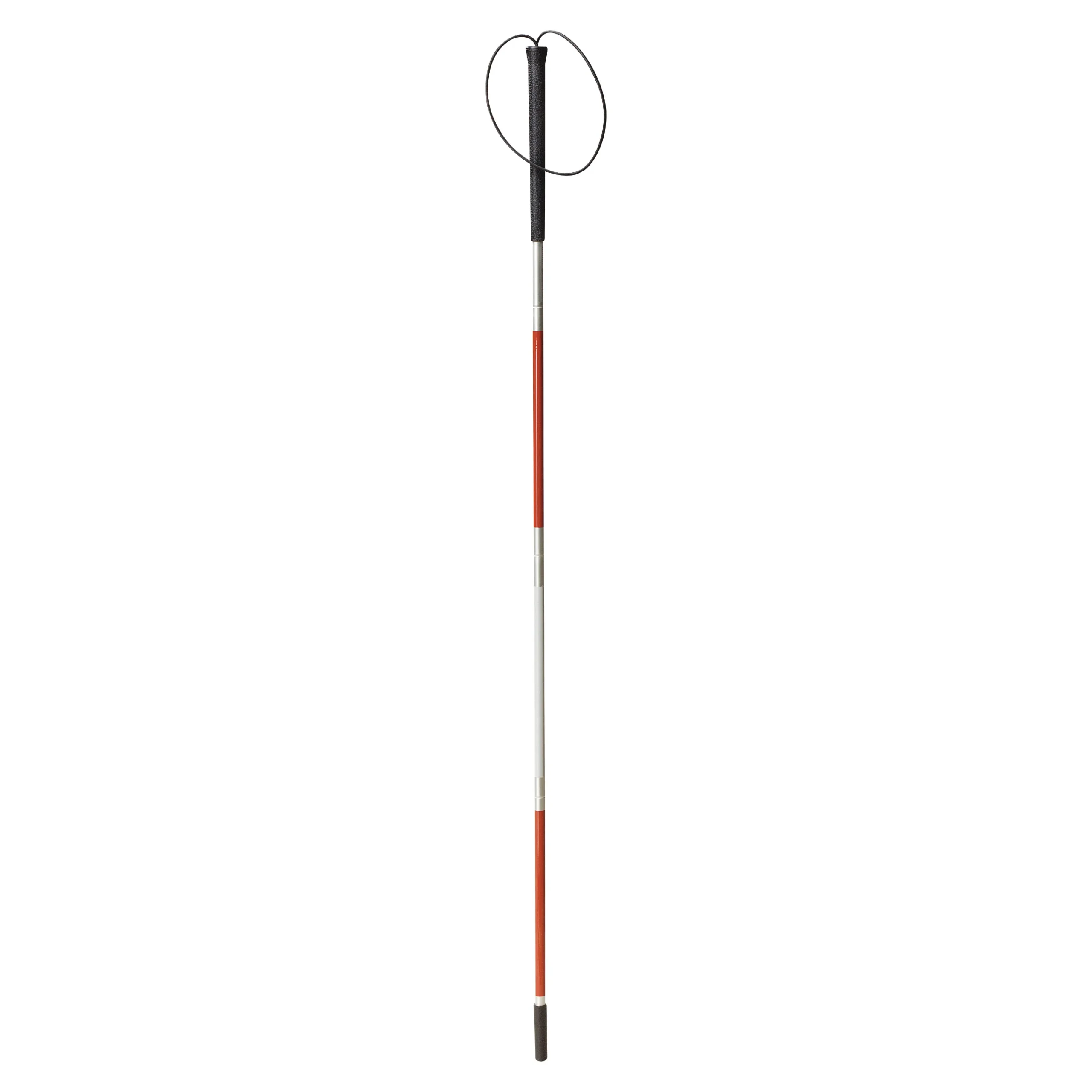
Did you know that those of us who are blind but have some degree of sight (we may be able to perceive light, shapes or shadows) use white canes with red reflective tape at the bottom?
The red color close to the ground can be helpful to the user for navigating common surfaces like sidewalks, grass, snow, curbs, stairs and other obstacles as the red provides extra visual contrast for people with low vision.
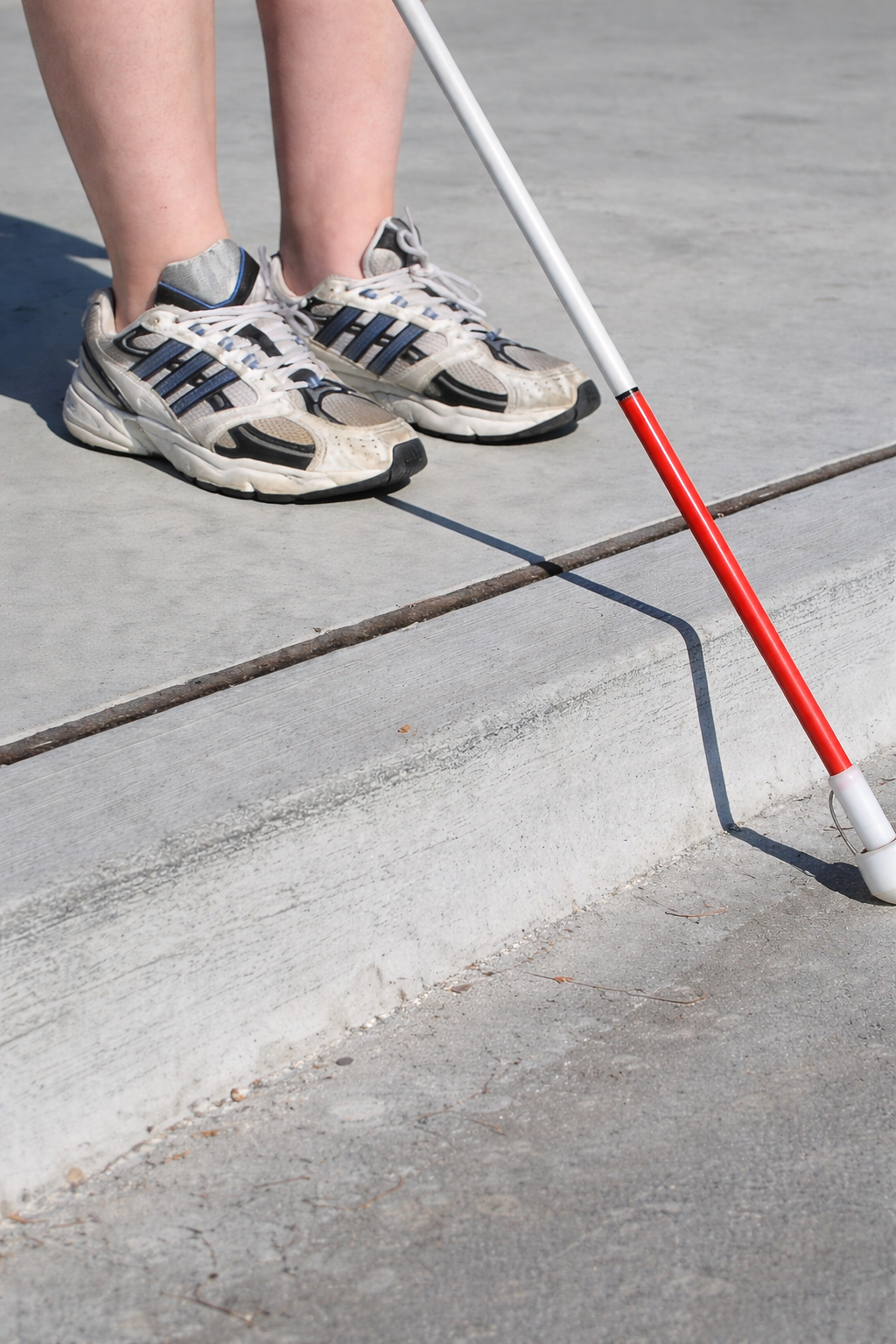
The red at the bottom also acts as a subtle signal, conveying to others that while the user may have some remaining vision, they are still visually impaired and require assistance and consideration.
In my own personal case, the red looks black to me if I hold it close to my face. At the distance the bottom of my cane is away from my eyes when I am using it, I am unable to see well enough to use the contrasting effect, plus my depth perception is non-existent.
It is important to mention that while the above is true for the United States and Canada, in the United Kingdom/Europe, a red band on a cane often indicates a person with both hearing and vision loss.
Should you happen to see a blind person out in the wild, where we are free to roam about, check out the bottom of their cane. After all, we are used to being stared at (not by you, of course). We might as well make it educational.
Sister Rain’s Note:
You may be confused that I used the term “blind” while combining it with a statement about people with some sight. If you would like to learn more, click here for my story Blindness Is A Spectrum.
#sisterrain #alittlesightalotofheart #legallyblindwriter #writer #writersofinstagram #blind #lowvision #visuallyimpaired #visionloss #blindness #blindnessisaspectrum #legallyblind #sightloss #vision #opticneuropathy #alittleexplainaboutthecane
