





I have been to Fort McHenry in Baltimore, Maryland on several occasions, and each time, when the movie shown in the Visitor Center is over, as “The Star-Spangled Banenr” plays and the curtain opens, revealing the American flag flying over the fort, I am deeply moved.
On September 14, 1814, Francis Scott Key began writing a poem aboard the HMS Torrant after he witnessed the bombardment of Fort McHenry by the British Royal Navy during the Battle of Baltimore in the War of 1812. He was compelled to put pen to paper after observing the large U.S. flag waving triumphantly above the fort after the battle.
Two days later, Key completed the poem in his room at the Indian Queen Hotel. His untitled and unsigned manuscript was printed as a broadside the next day under the title “Defence of Fort M’Henry,” with the notation that the accompanying music was to be the popular tune “Anacreon In Heaven.”
It was published in newspapers across the country under the new title, “The Star-Spangled Banner.” The song was finally adopted as the American national anthem by an Act of Congress in 1931, signed by President Herbert Hoover, more than a century after its first publication.
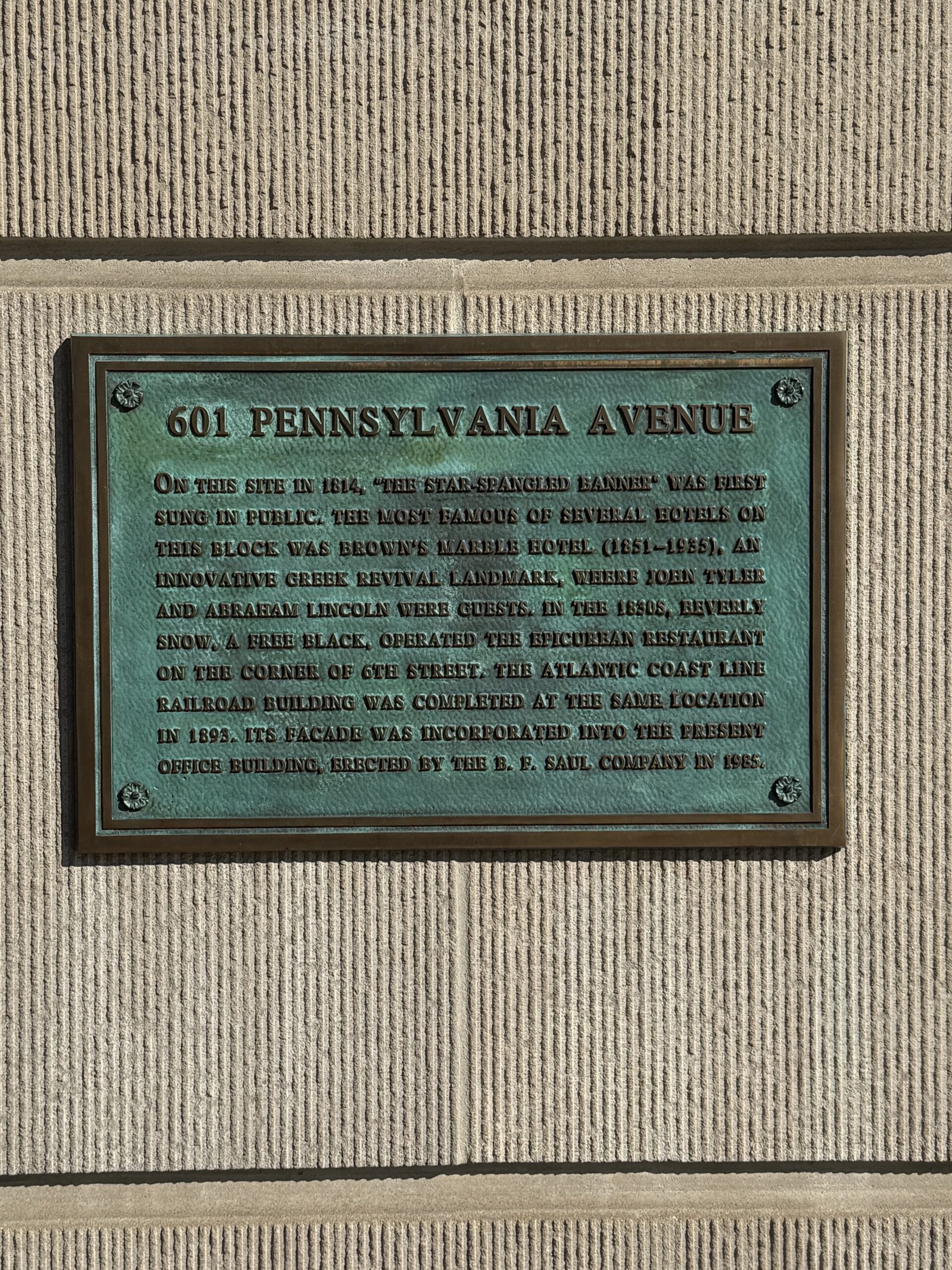
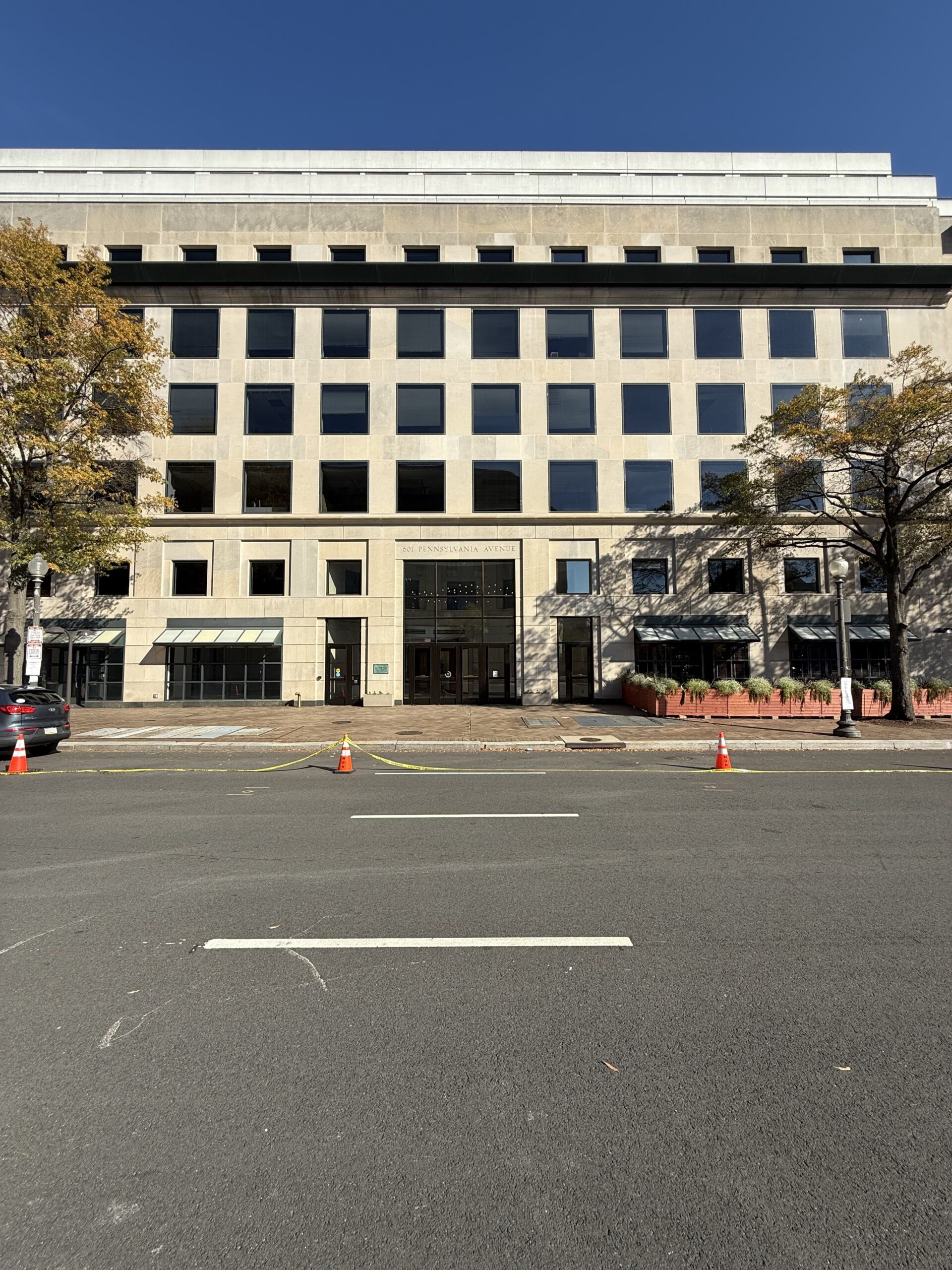
I was excited to visit the location of the first singing of “The Star-Spangled Banner,” marked by a plaque, in Washington, DC. My husband and I had a little difficulty finding it, GPS kept sending us to a SW address, when we needed NW. Before we realized this, Mister Rain walked all around the area trying to find the building and marker.
Once we figured out the mistake, we located the plaque. I tried to imagine what Washington looked like then, as well as that moment. Did people pass by with their heads down or was there a crowd? On this Sunday morning when I was there, just a few people were out, obviously residents of the neighborhood, going about their usual Sunday morning routines.
In preparation of writing this story, I researched the circumstances of this first performance of the national anthem. Before I share what I uncovered, should you run into my husband, most likely wildly chasing another goose on behalf of his wife, please do not mention it.
The first public singing of what had become “The Star-Spangled Banner” took place in Baltimore at the Indian Queen Hotel, where, as mentioned above, Key had stayed while he finished writing his poem. But there was another Indian Queen Hotel, down the road in Washington, DC, and the current owners of the building on that Indian Queen’s former site put up a “The Star-Spangled Banner” plaque, unaware that their hotel was the wrong one in the wrong city. When the truth became known, they decided to keep the plaque up.
I had planned to allow my husband learn all of this along with you when I posted the story, but I couldn’t stop laughing as I typed the draft. It was time to come clean. Sitting in the dining room, I could not see his face as he stood by the sofa, but the silence that followed my confession said it all. When a response came, it was a soft, “Oh, my God.”
Oh, say, does that Star-Spangled Banner plaque hang,
‘Or the city that is not, where the song was first sang.
Sister Rain’s Note:
After I had written this story and loaded it into the website in Draft mode until its publication in a few weeks, Mister Rain received an envelope in the mail. Inside was an infraction from the District of Columbia – a ticket – in the amount of $200.
Apparently, while I sat in the car frantically trying to find more information on where this dang plaque was displayed, and my husband walked around the block looking for it, we were parked in a bus lane.
Though no one was here for the the first singing of “The Star-Spangled Banner” in 1814, Big Brother was most definitely there in 2025.
#sisterrain #alittlesightalotofheart #legallyblindwriter #writer #writersofinstagram #ushistory #history #americanhistory #usa #america #unitedstates #americanrevolution #fortmchenry #baltimoremd #francisscottkey #indianqueenhotel #starspangledbanner #washingtondc #andtheincorrectlyplacedplaquewasstillthere
