





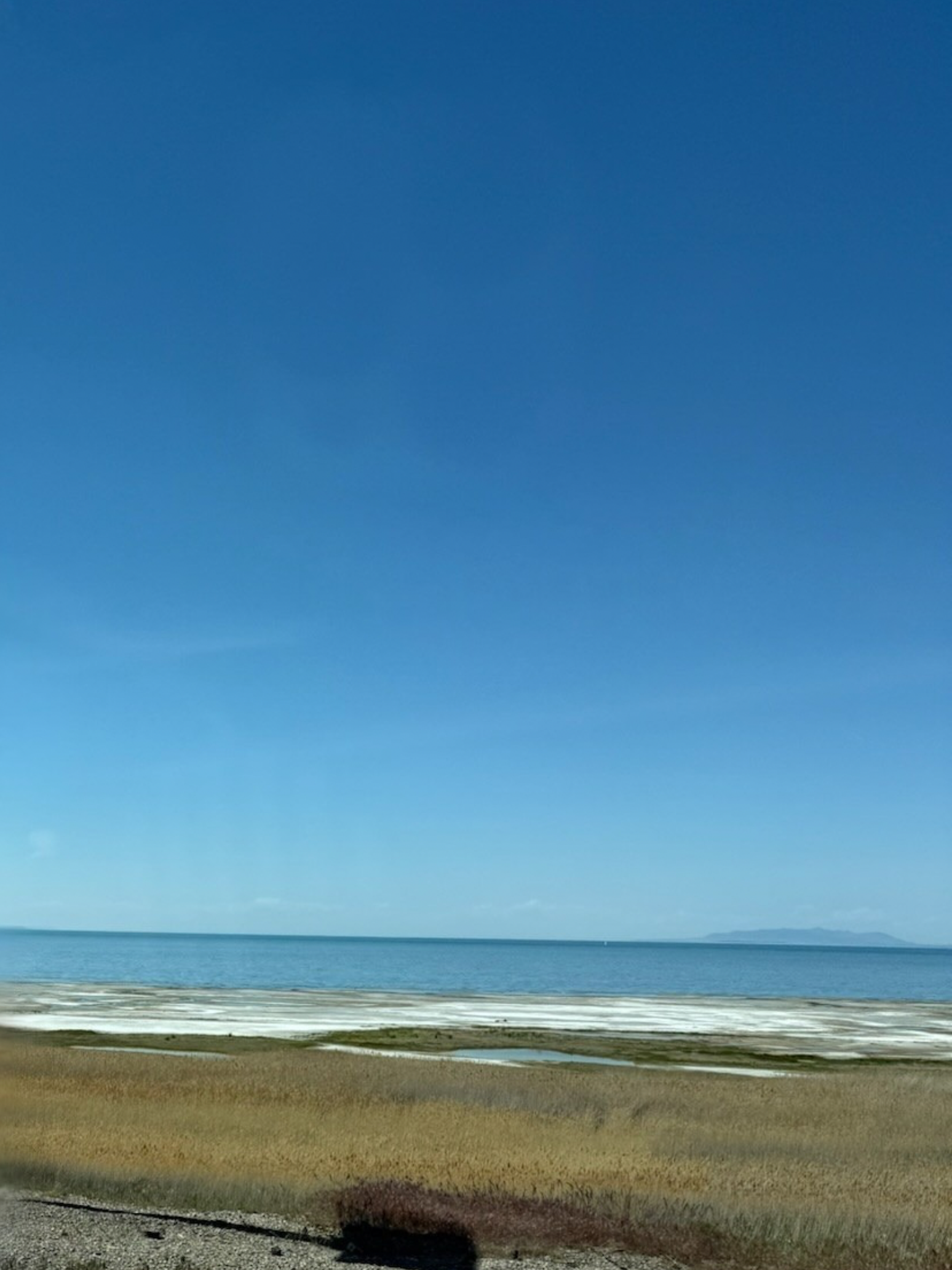
About half an hour west of Salt Lake City, my husband began to see small collections of water close to the road. A nearby railroad causeway was blocking the view on its other side. There was no signage, but as we continued to see the pools of water, it was apparent we were arriving at our destination, the Great Salt Lake.
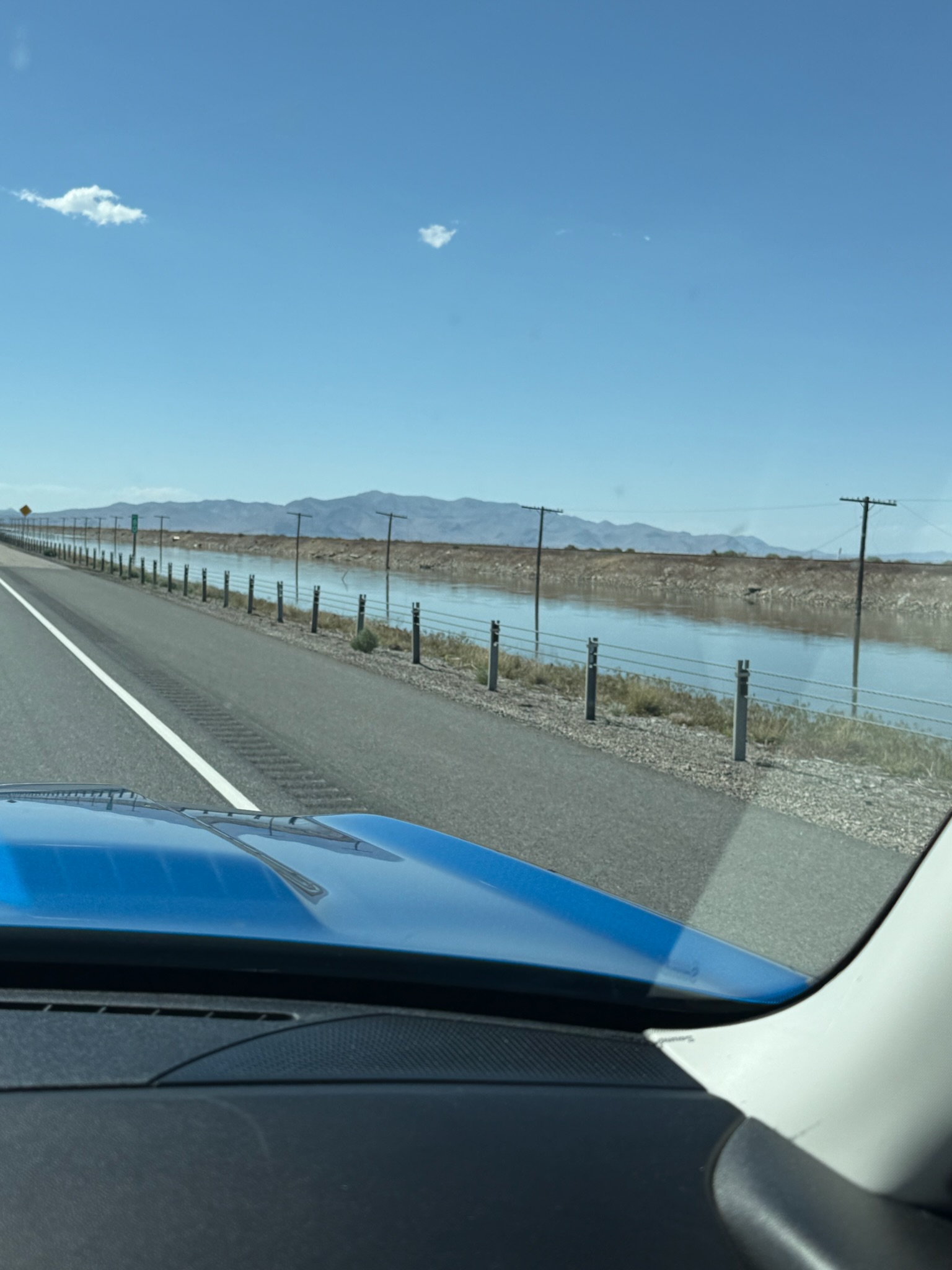
The Great Salt Lake is the largest natural lake west of the Mississippi River and the largest saltwater lake in the Western Hemisphere. It is a terminal lake, meaning it has no outlet. The result of that is that evaporation leaves the water three to five times saltier than the ocean.
Spanning almost 1,700 square miles, it is a remnant of the prehistoric, ice-age Lake Bonneville, which covered much of western Utah. The lake makes up 75% of Utah’s wetlands and is a vital resting spot for up to 12 million migratory birds traveling the Pacific Flyway.
Any doubts we still had that this was the Great Salt Lake were gone once we could see the full scope of the far-reaching, striking blue water edged by what looked like snow but was, in fact, salt.
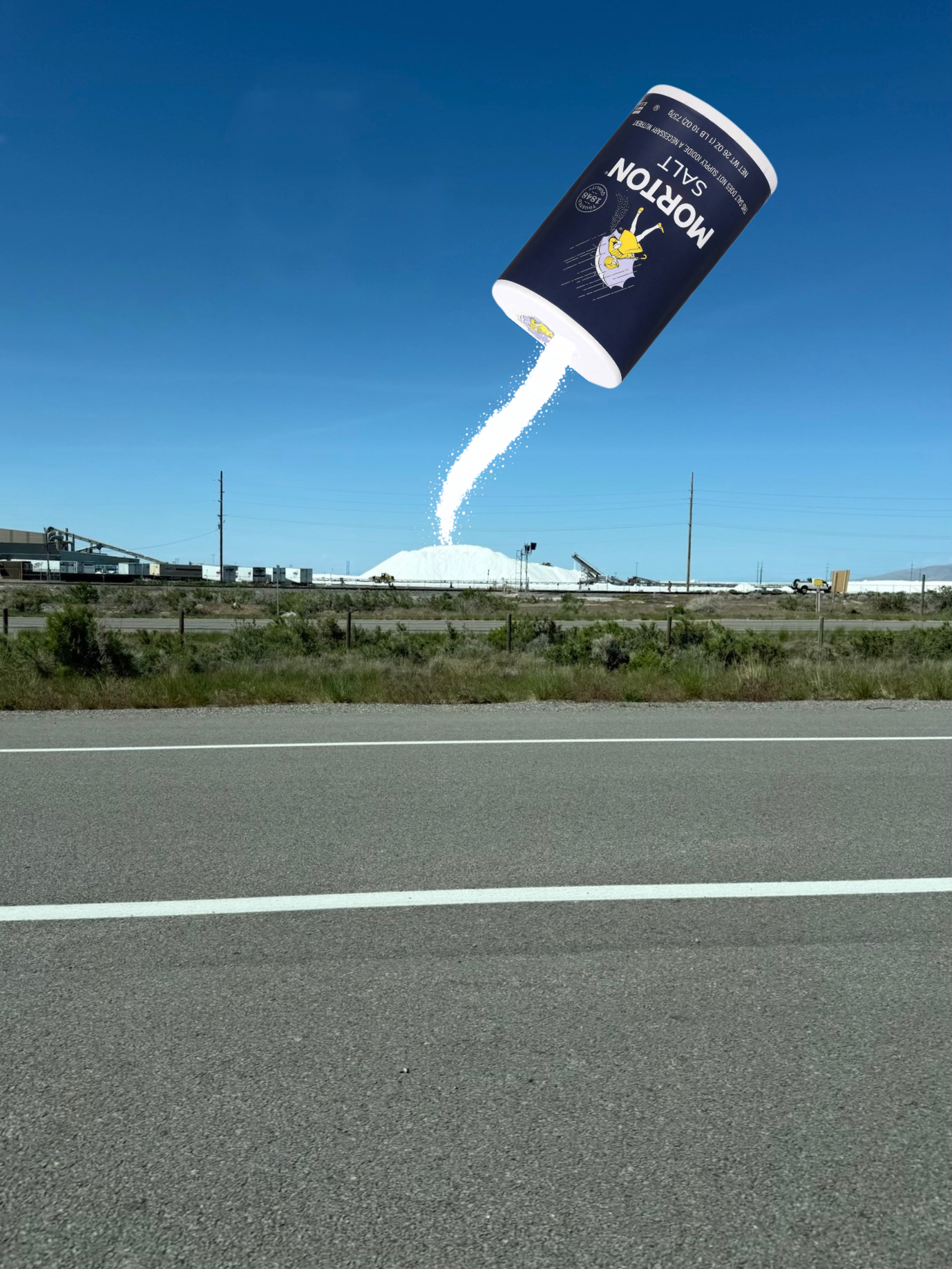
“There’s a Morton Salt Plant!,” Mister Rain said. Nothing in life has ever made more sense. I will never look at the container with the girl in the unbelievably short yellow dress holding an umbrella in the rain on the front the same way ever again.
Sadly, the Great Salt Lake is drying up, reaching historically low water levels. Up to 72% of the water that used to refill the lake is diverted mostly for agriculture before it arrives.
And then there’s climate change.
These diminishing levels cause toxic dust to blow over the Salt Lake City metro area and threaten the vital ecosystem on the Pacific Flyway.
Researchers and environmental groups have identified and advocate for a multi-pronged approach to getting more water into the lake. I hope they are successful.
I had only arrived in Utah six hours earlier. This was the first natural wonder of many I would experience in the next eight days. Wherever I travel, I always know how fortunate I am, but the danger the Great Salt Lake is facing was an important reminder to take none of what was to come for granted.
#SisterRain #ALittleSightALotOfHeart #LegallyBlindWriter #LegallyBlindTraveler #Travel #Traveler #TravelWriter #Adventure #Wanderlust #Explore #Vacation #Utah #MortonSalt #GreatSaltLake
