
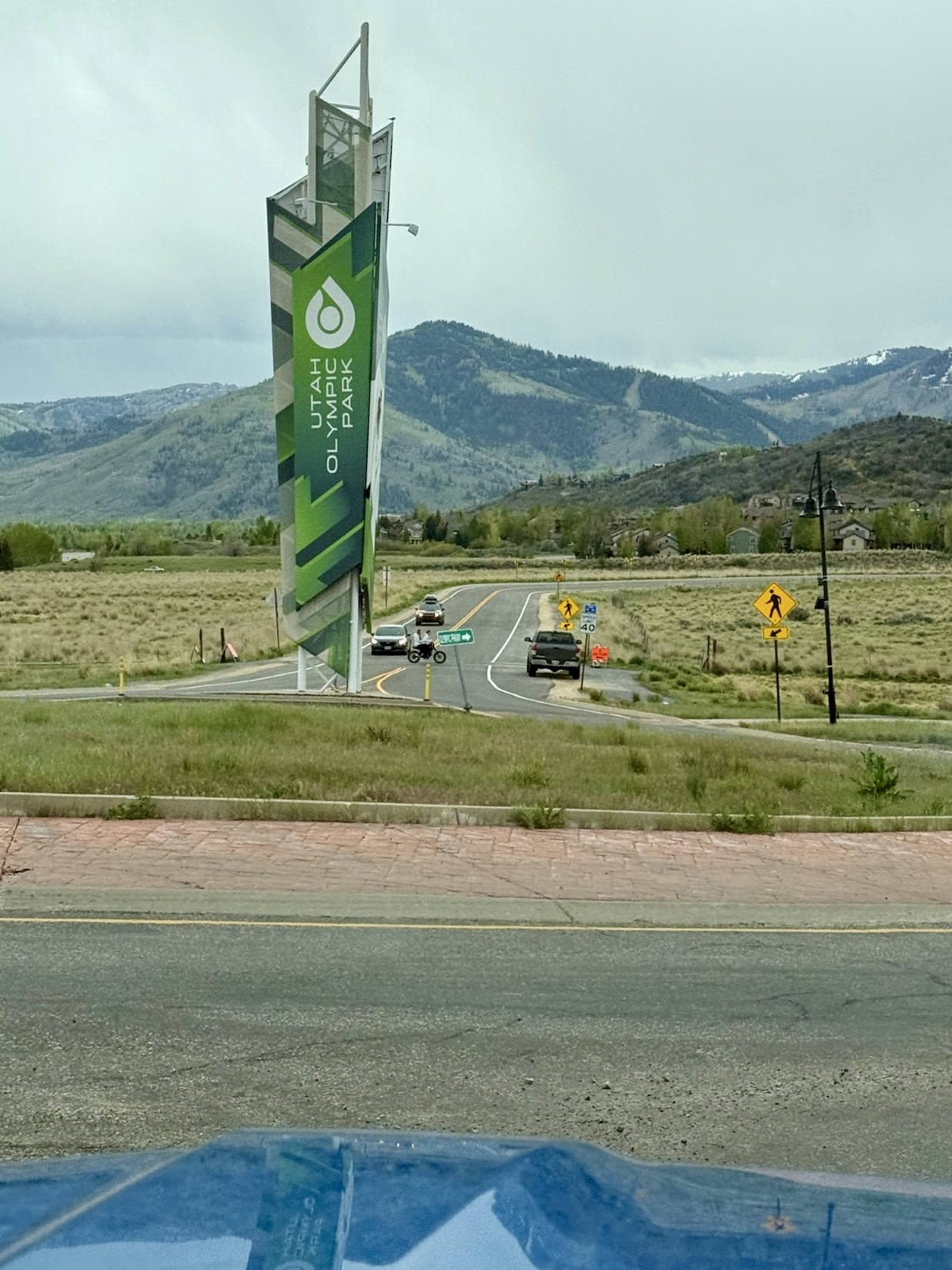

While in Park City, Utah, I went on the one-hour guided tour of the 400-acre Olympic Park. The Winter Games were held here in 2002 and in 2034 they will host them again.
Before the tour began, my husband and I spent some time exploring the Olympic museum. There are exhibits from the 2002 Winter Olympic and Paralympic Games with memorabilia and interactive displays.
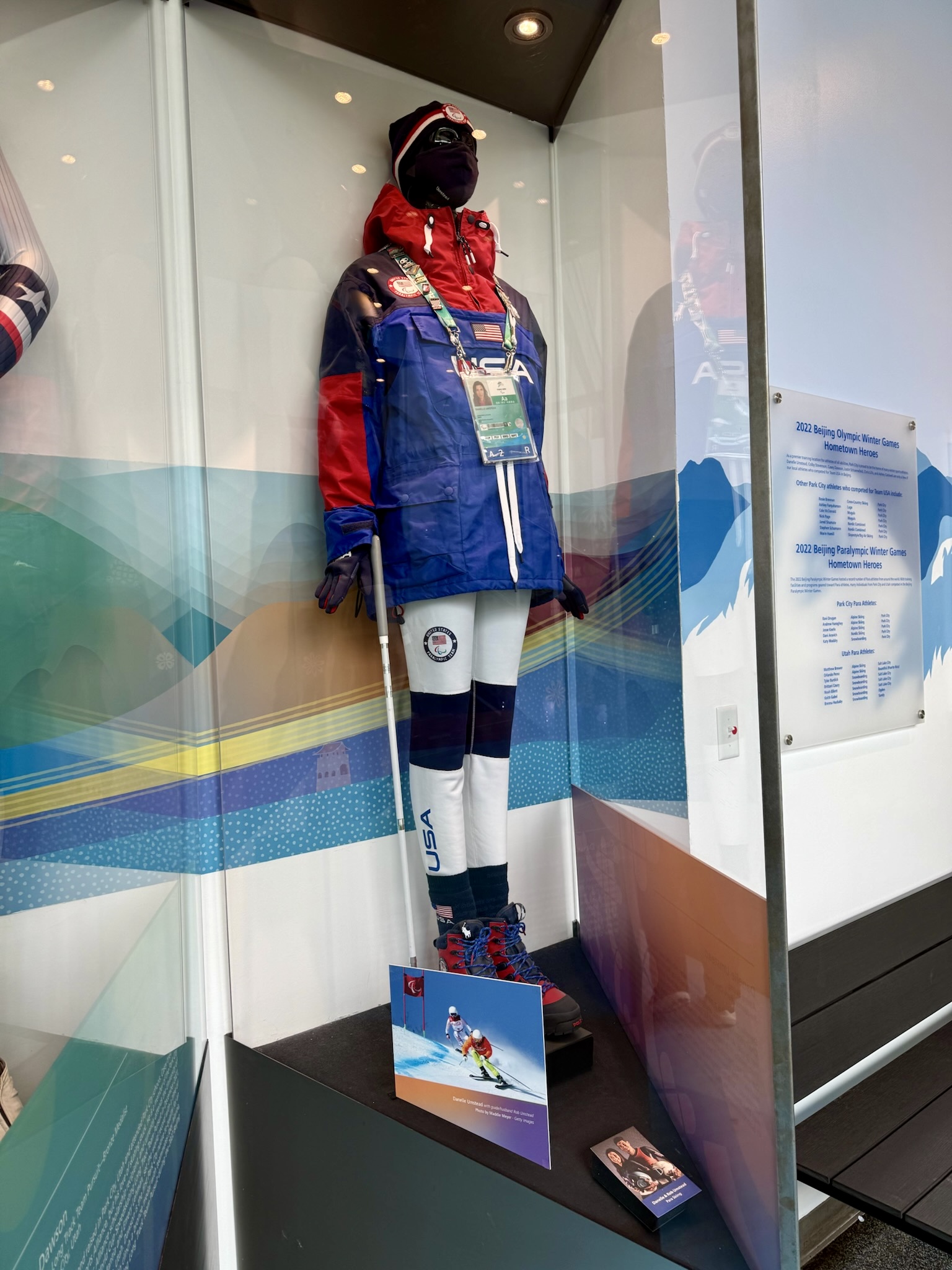
One of the first things we saw was the uniform of Danelle Umstead, an American alpine skier and Paralympian. Like me, Danelle is visually impaired. I have been following her since my vision loss.
Mister Rain, a gold medalist when it comes to the sport of being a good sport and acting as my model for photos to accompany my stories, climbed into the bobsled first, them assumed the position on the luge. As a thank you, I promised not to share the pictures of him attempting to get up.
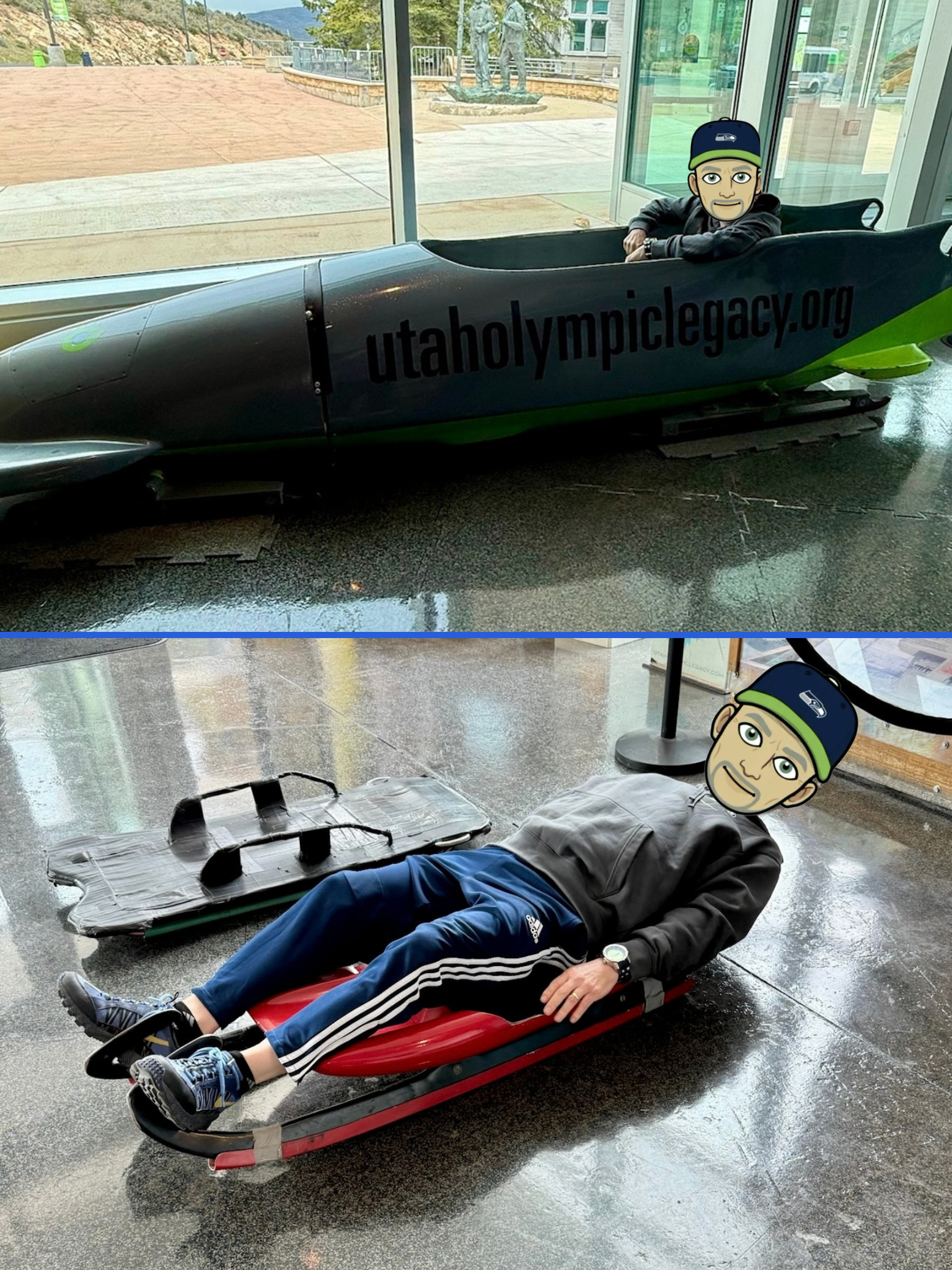
I was surprised to learn that the skeleton, shown next to my husband, is considered safer than the luge. You are situated head-first on your stomach on the skeleton as opposed to feet-first on the luge so I incorrectly expected the opposite to be true. The skeleton is the heavier sled; its lower center of gravity gives it more stability, while the luge’s higher speeds and lighter sled make it more technically demanding and riskier.
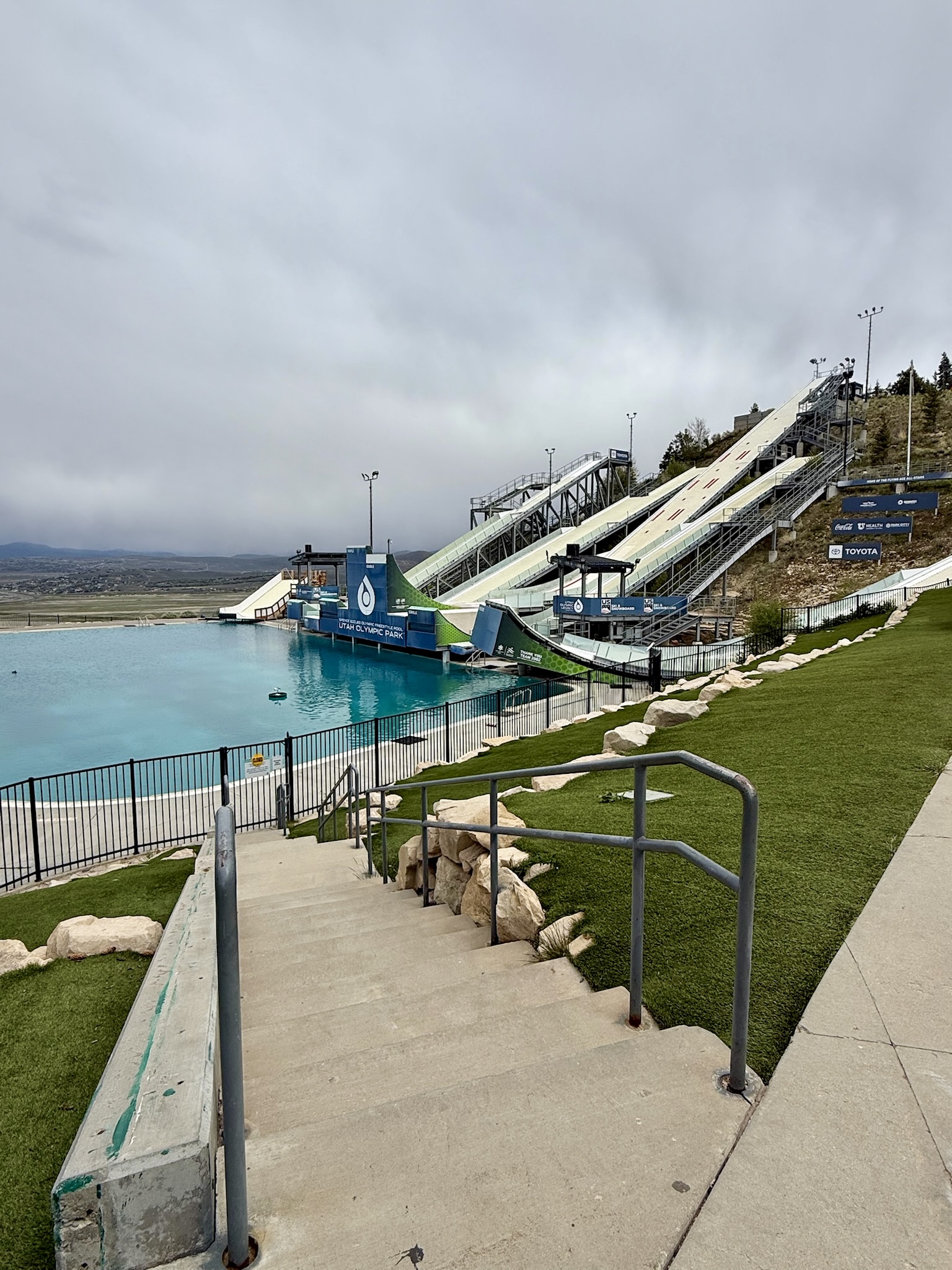
Meeting at the appointed time and location in the museum to begin the tour, we headed to the small shuttle bus with the other six people in the group. We passed the large pool where the U.S. Ski Team’s freestyle skiers and aerial athletes, plus other winter-sport Olympians, practice tricks before the season, landing in the forgiving water.
Traveling up alongside the twisting bobsled / luge / skeleton track used during the 2002 Winter Olympics, we stopped and got out at the top of the course, high on the mountain.
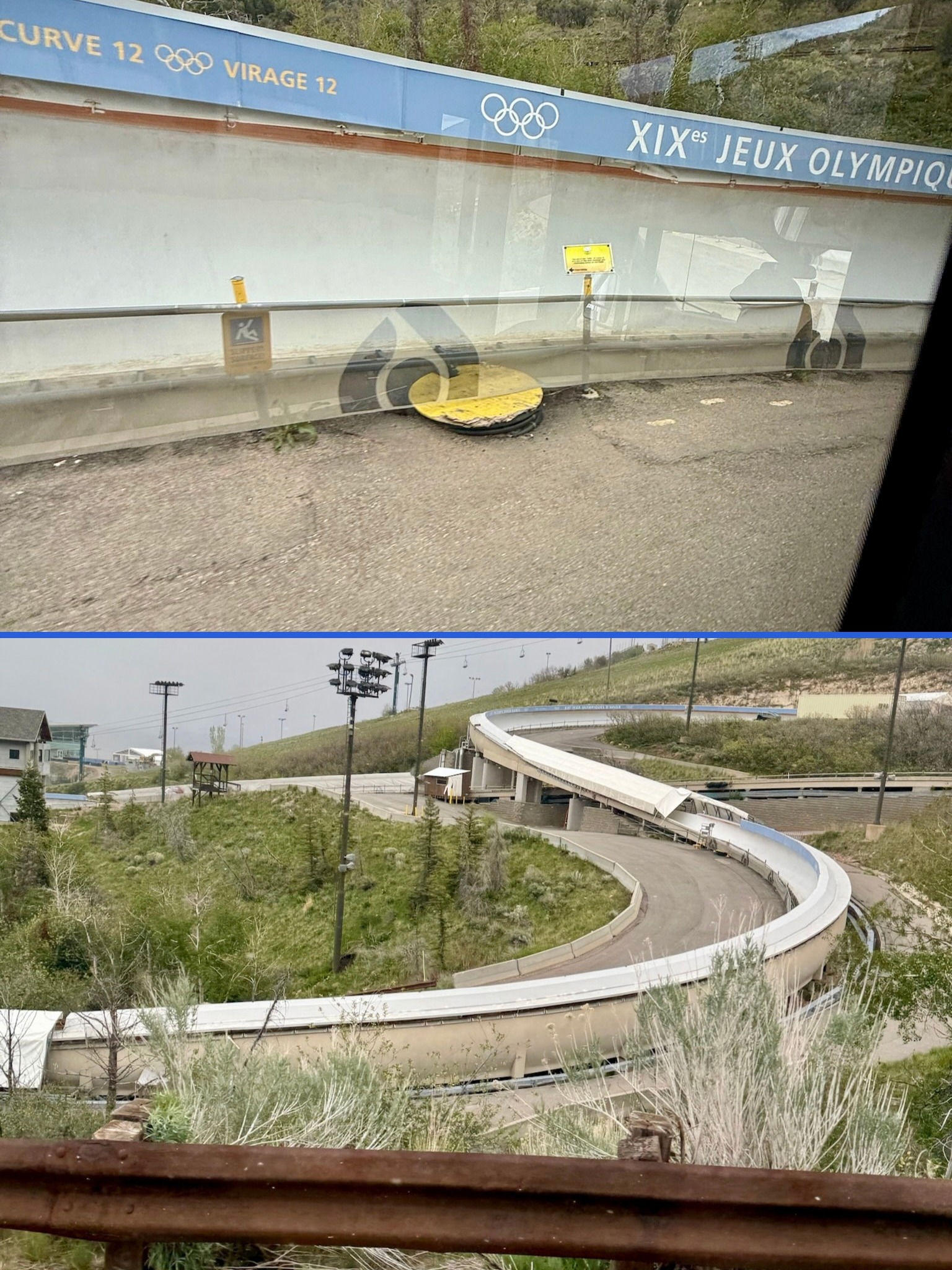
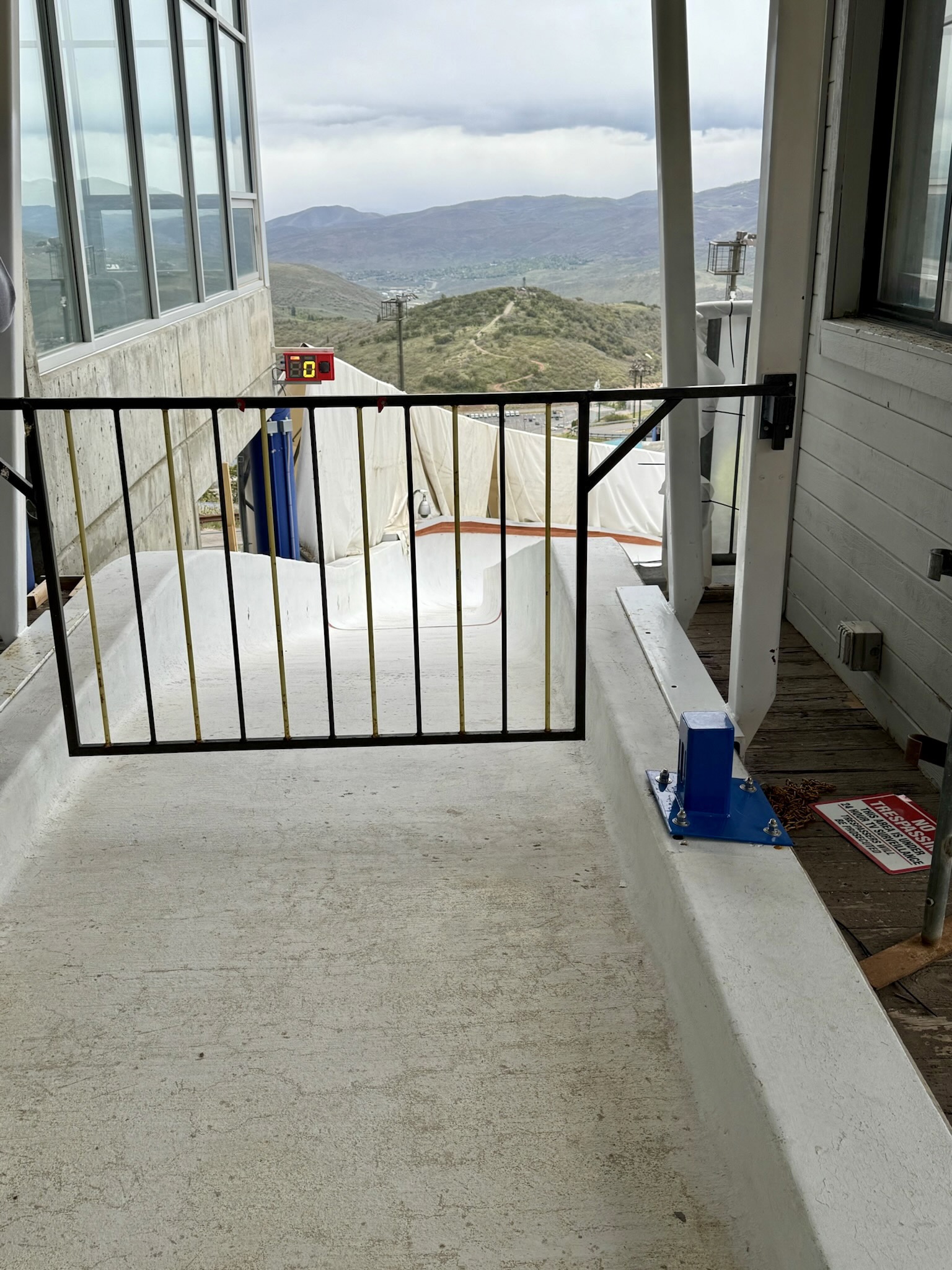
If you have watched the Winter Games, you have no doubt seen the athletes “bobbing.” This is the term for the backwards and forwards push to build speed before getting in or on their sled. I could immediately picture it as I stood where that takes place.
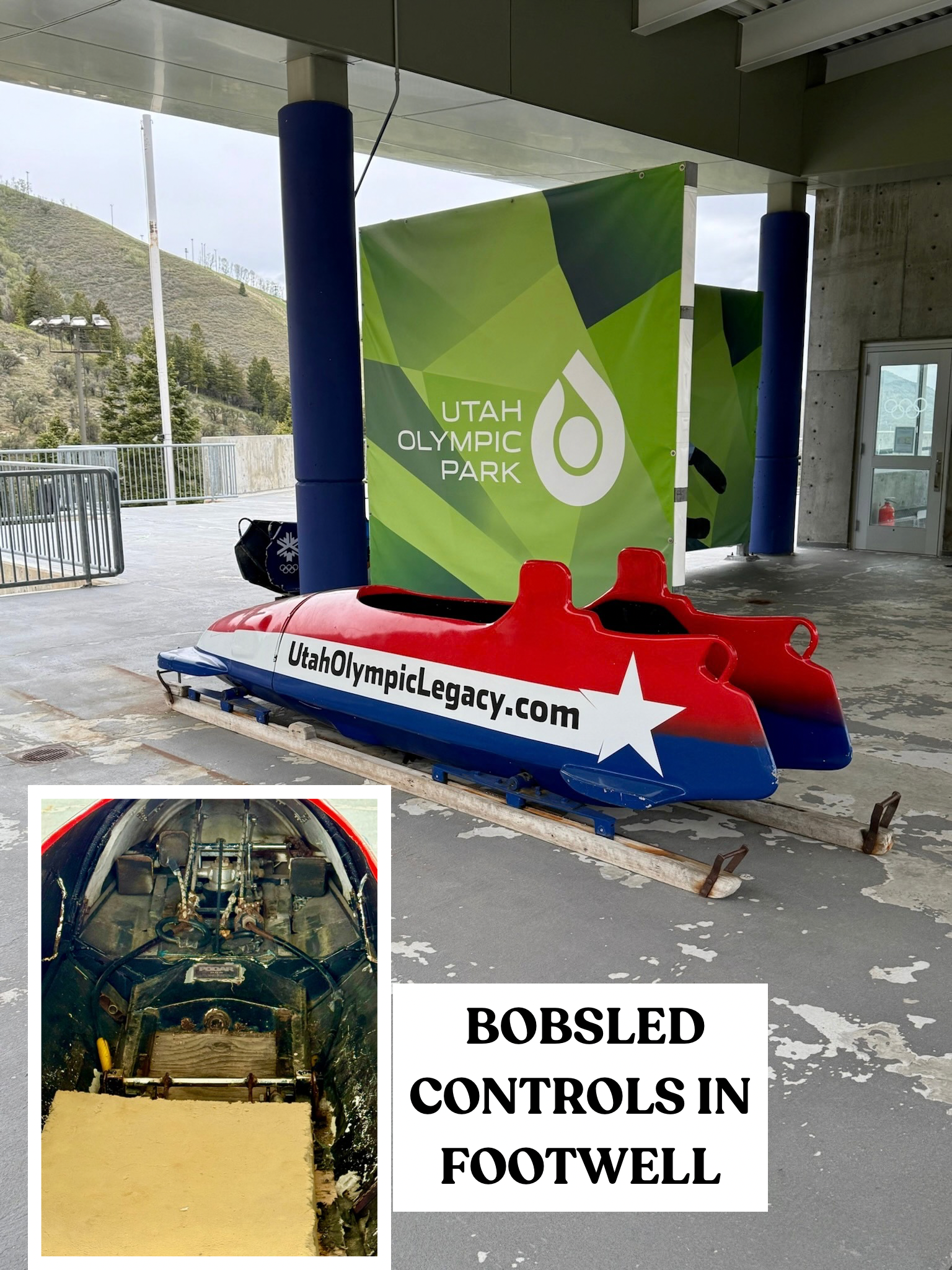
On display at the top of the sliding track was a bobsled with the full set of foot controls. I will never understand how the athletes can operate these machines while hurtling down a long icy chute built on concrete, usually about 1.6 miles long with roughly 16-19 sharp turns. They drop around 426 feet from start to finish, giving an average grade of 8% and causing the sleds to hit speeds up to 90 mph. Some days putting my shoe on the correct foot while sitting on the edge of the bed is too much for me.
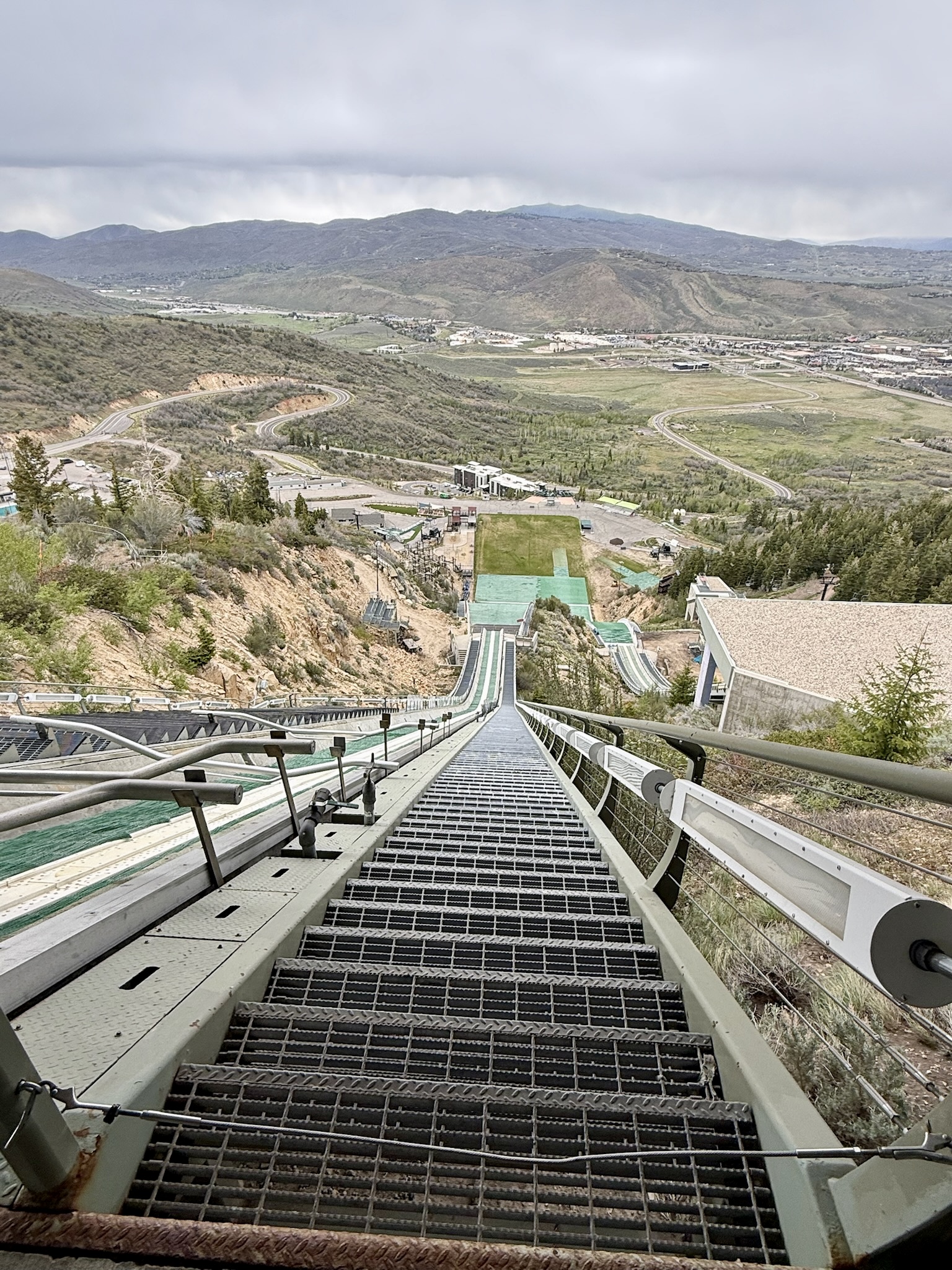
The next stop was the top of the ski-jump complex. It was unfathomable how steep and enormous the jumps are from an athlete’s perspective. TV in no way does it justice.
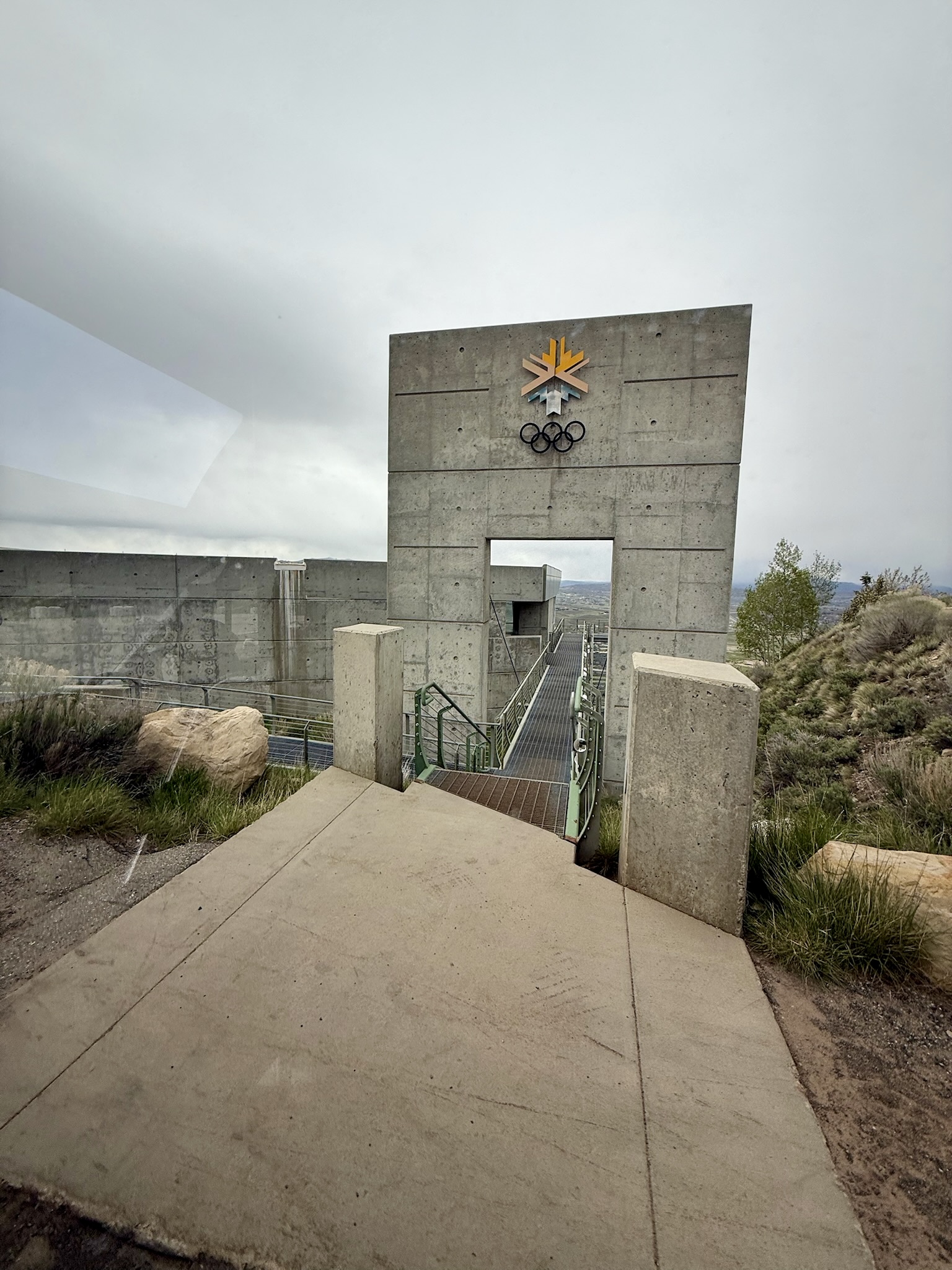
At 400 feet, you get great views over the Olympic Park and surrounding Park City mountains. It was cloudy but my husband said visibility was still good.
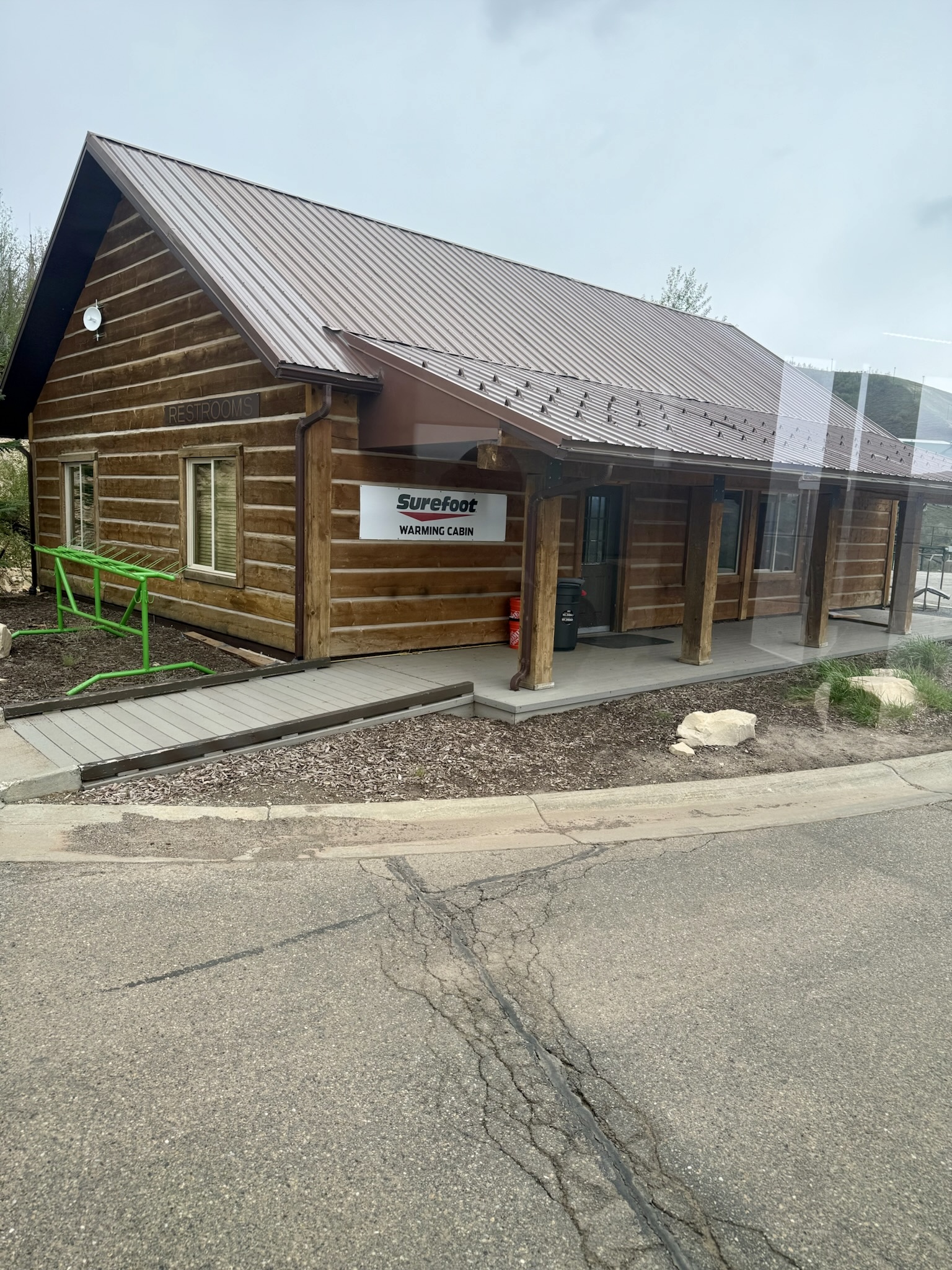
There was a log cabin across the road from the ski jump. It is a warming building for the athletes.
As we stood listening to our guide, an astonishing thing occurred. It was the 17th of May. It was 38 degrees. And it began to snow. Even the man who was conducting the tour and a lifelong resident of Park City couldn’t believe it. Being at the location of previous and future Winter Olympics in the spring and experiencing winter weather was quite a remarkable thing to have happen.
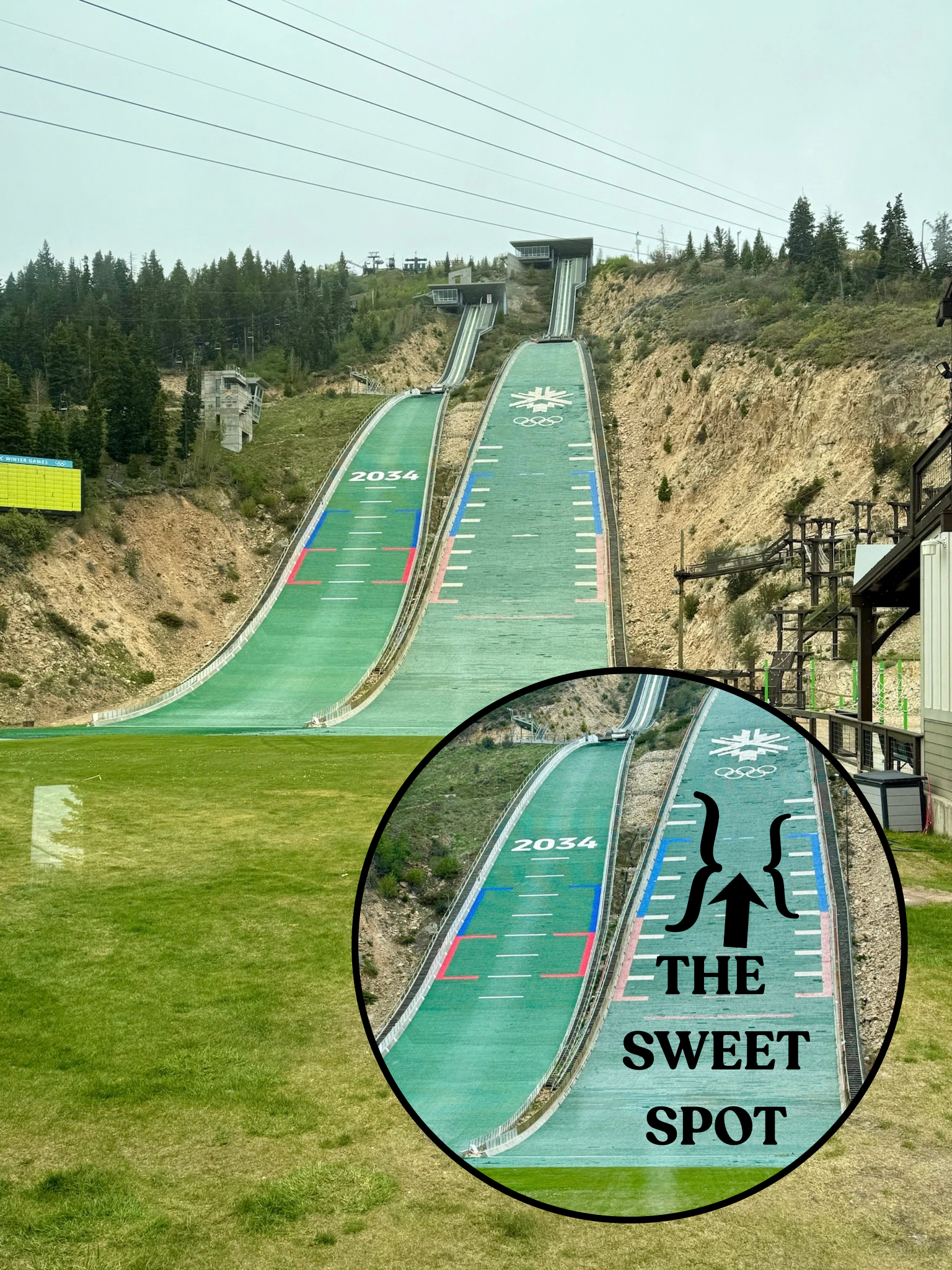
The final stop on the tour was the bottom of the ski jump. Our guide explained that the area marked in blue is where you want to land. Anything past that is extremely dangerous; life-threatening even.
As much as the day that we visited worked to our advantage with the arrival of snowflakes, we missed a few things by a few weeks. This park is not just a preserved Olympic site, it is still an active training center, but we beat the arrival of athletes by about 14 days, the only way we would beat them in anything!
In a week’s time, the adventure rides offered by the park would be open, including a bobsled experience where you and a professional pilot ride the actual 2002 Olympic sliding track, hitting speeds over 60 mph and pulling up to 4–5G forces. Several zipline courses, extreme tubing, scenic chairlift rides gaining 440 vertical feet of elevation and an alpine slide are also available for the adventurous.
I was looking forward to the bobsled ride but being driven up to the tops of the Olympic facilities and seeing the scale of the ski jumps and sliding track firsthand was a podium-worthy thrill for me.
#SisterRain #ALittleSightALotOfHeart #LegallyBlindTraveler #Travel #TravelWriter #Adventure #Wanderlust #Explore #Vacation #RoadTrip #America #Utah #ParkCity #OlympicPark
