

Sister Rain Note:
I first learned of Major John Andre while watching the AMC TV series, “TURN: Washington’s Spies.” I was totally hooked by the story of George Washington’s Culper Spy Ring.
A few years ago, I spent a day in Tappan, New York, the location where, upon General George Washington’s orders, Major Andre was hanged as a spy, a result of his involvement with Benedict Arnold in the plot to surrender West Point to the British. (Click here for “I Spy John Andre.”) Several sites remained in the area relating to Major Andre, as well as George Washington, that I had not yet seen.
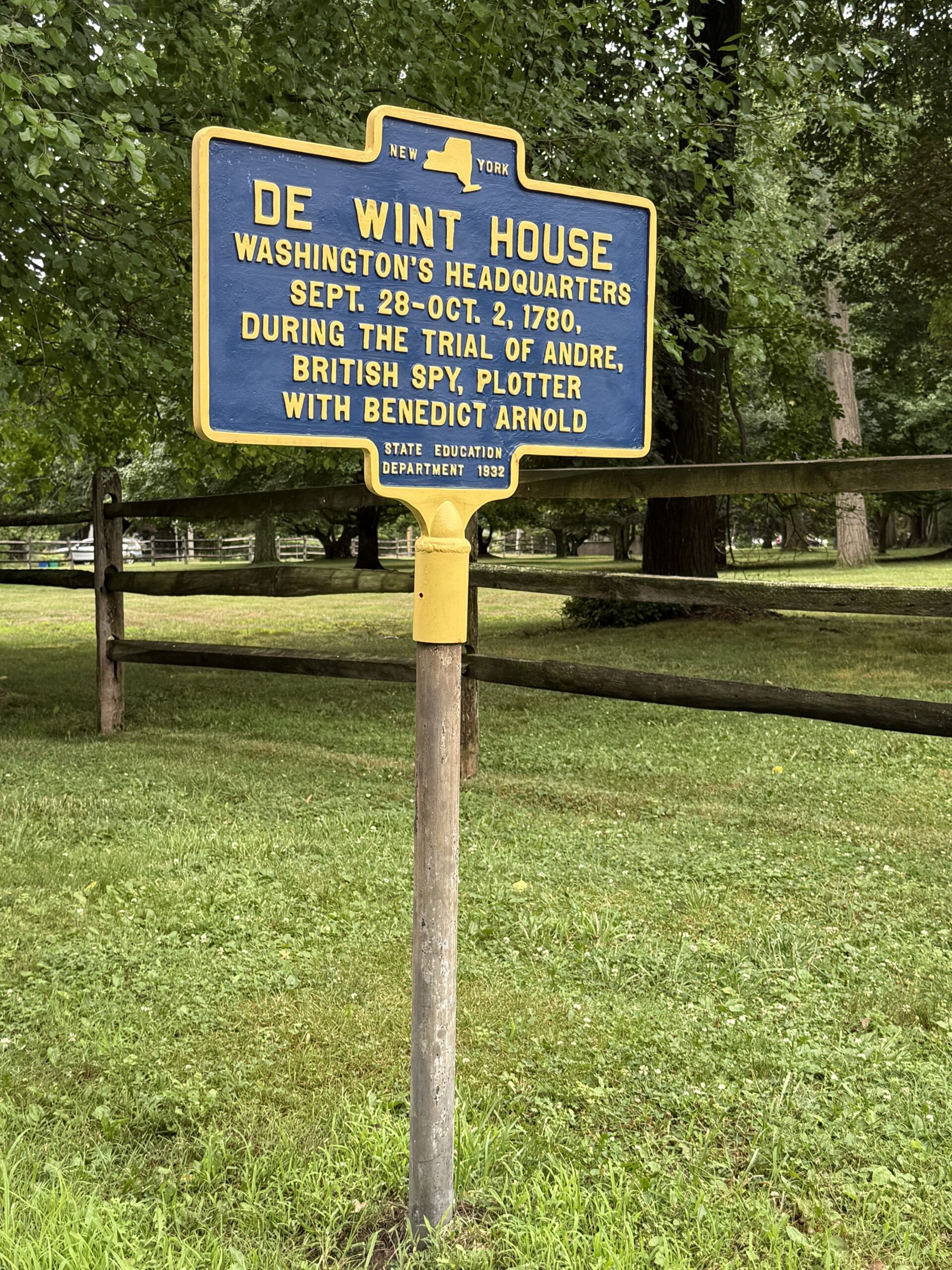
Recently I returned to Tappan to visit these locations, including the Baylor Massacre Site (click here), Tappan Reformed Church (click here), Old ’76 House (click here) and DeWiint House, a Registered National Historic Landmark, which served as Washington’s Headquarters when he was in the region.
For Part 1, click here.
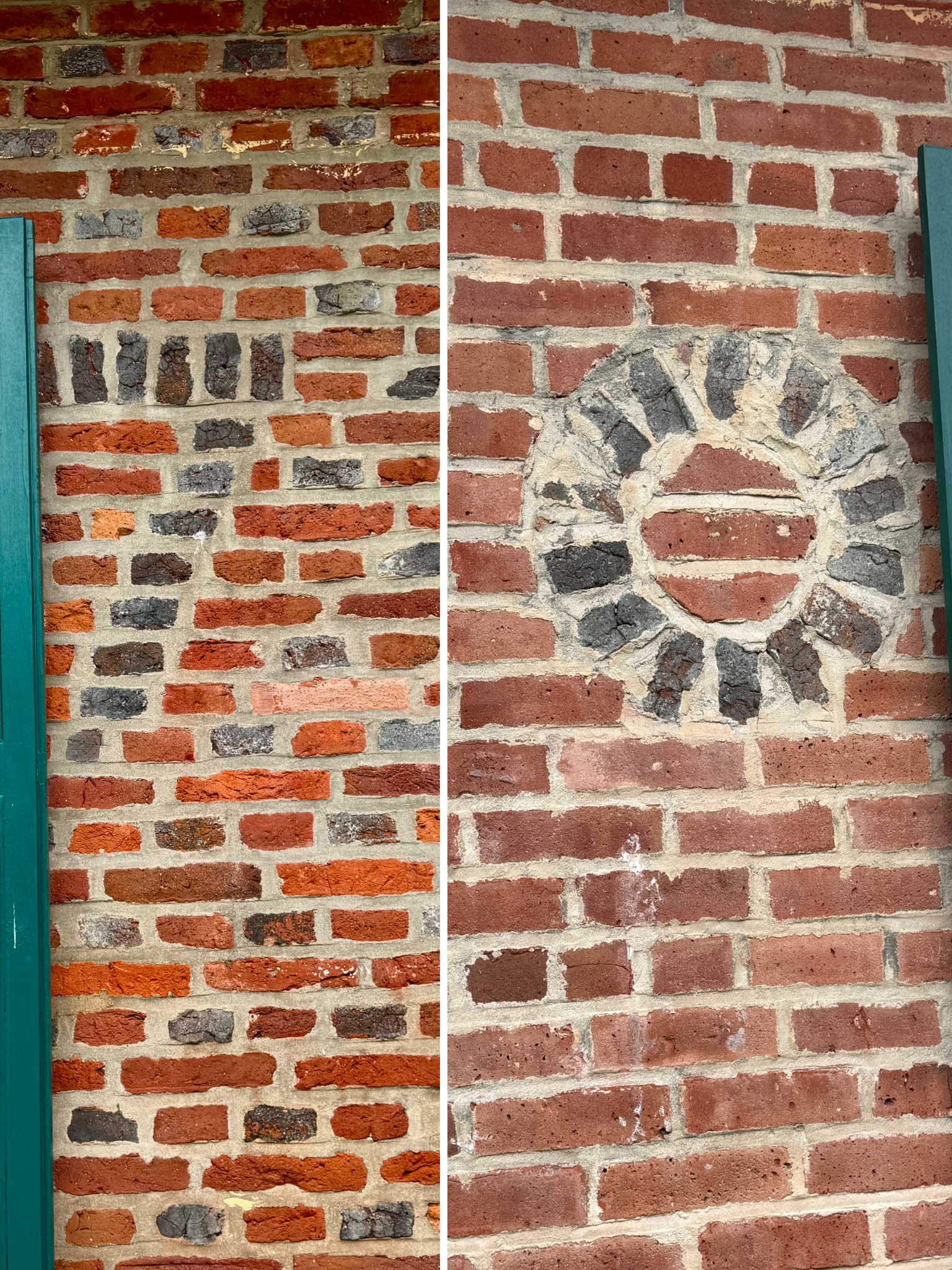
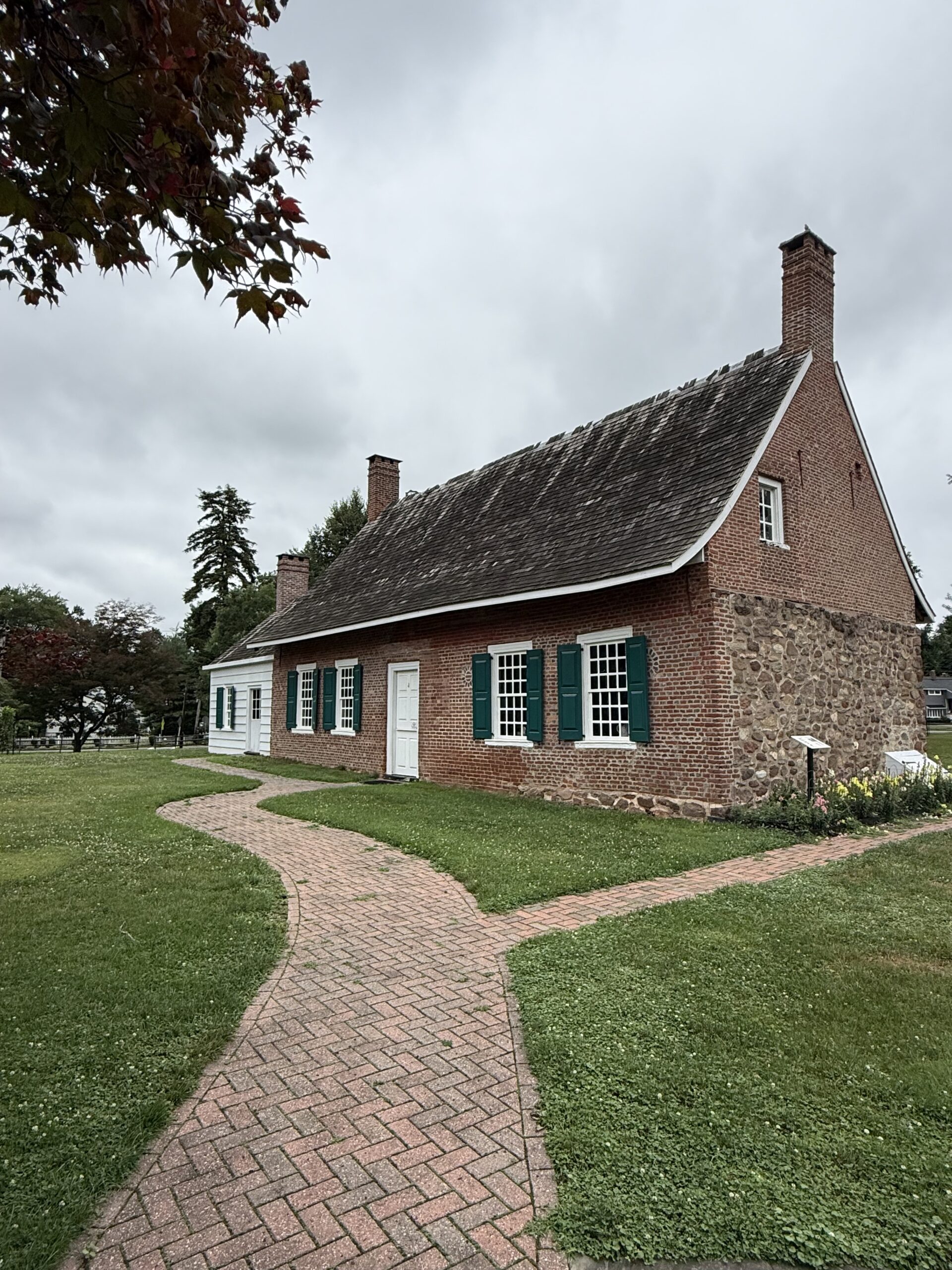
Arriving at the stone and brick home, my husband read the posted instructions for opening the door. Built in 1700, to the left of the door was half the date laid up on bricks, a 1 and a 7. To the right, two 0s. Patriot Johannes DeWint owned the home during the Revolutionary War.
A reproduction of a traditional Dutch-style door greeted us, with a split top and bottom section. The lower half could be kept closed to allow a breeze into the open upper part. A colonial babysitter and petsitter of sorts, children and animals could get fresh air but not run off. Called a Cross And Bible Door, the top half’s raised panels form a cross and the two at the bottom represent the pages of an open Bible.
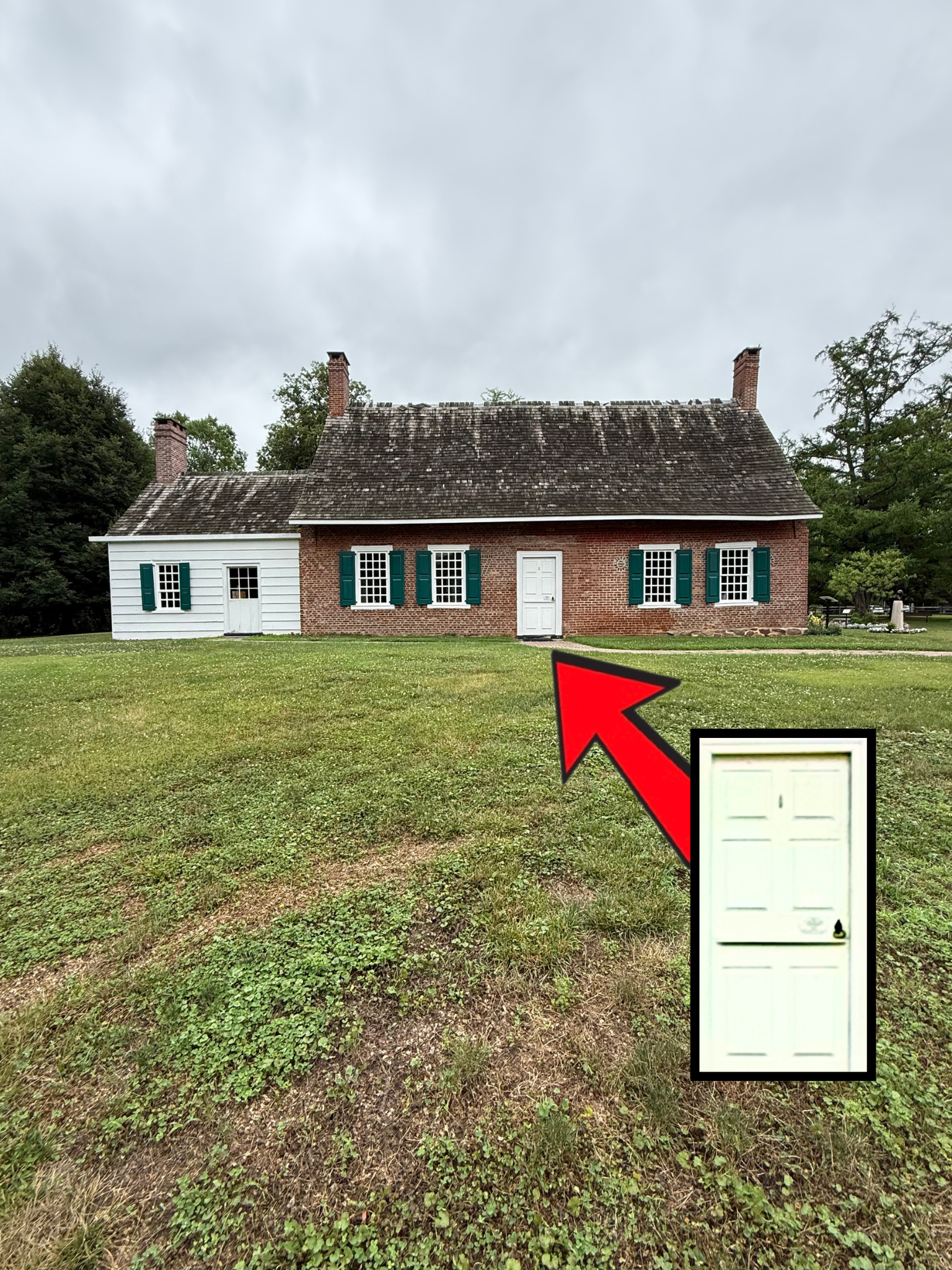
The hardware (hinges, latches and bolt) were forged by a blacksmith and are thought to be original to the house.
Stepping into the small entryway, once again, it was just us. I thought sure a staff member would be here. But it was a wonderfully unique experience to be by ourselves in this historic home. I wondered if George had ever been here by himself?
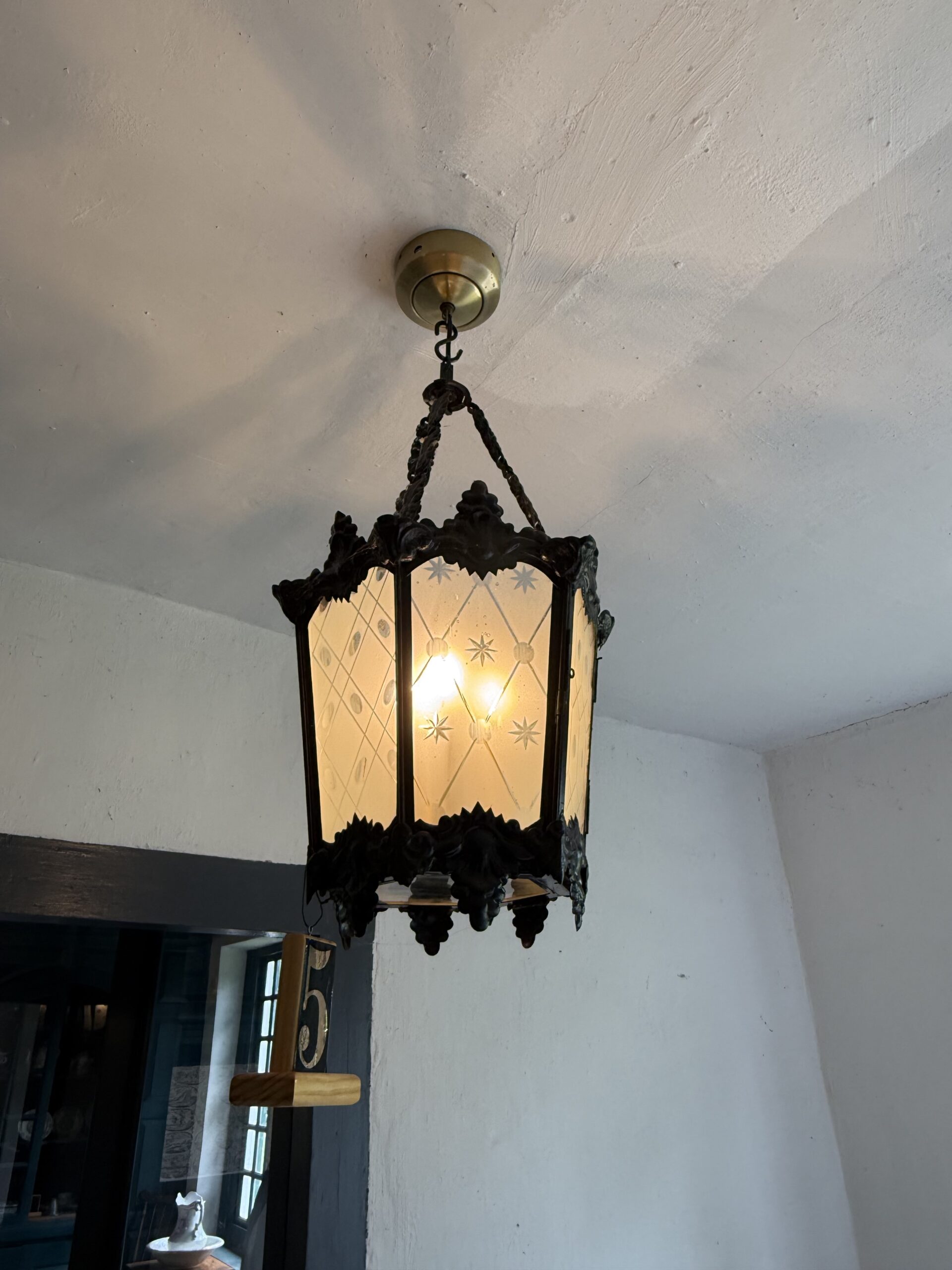
I gasped when I noticed the lantern hanging above me. It was beautiful. In the 1700s the fixture would have had candles placed inside to light the entrance, the glass slides keeping the wax from dripping everywhere.
Beneath my feet, a wood floor added in 1845 to replace the original dirt. Although the house’s first-floor rooms have been restored and furnished to reflect the period of Washington’s occupancy, wood was a more practical option for today.
The adjacent hallway was a utility space back then. Woodworking, sewing and a play area for children were a few of its uses. Small animals were placed here to protect them from outside predators, Many of the artifacts in the Carriage House were found in this hallway.
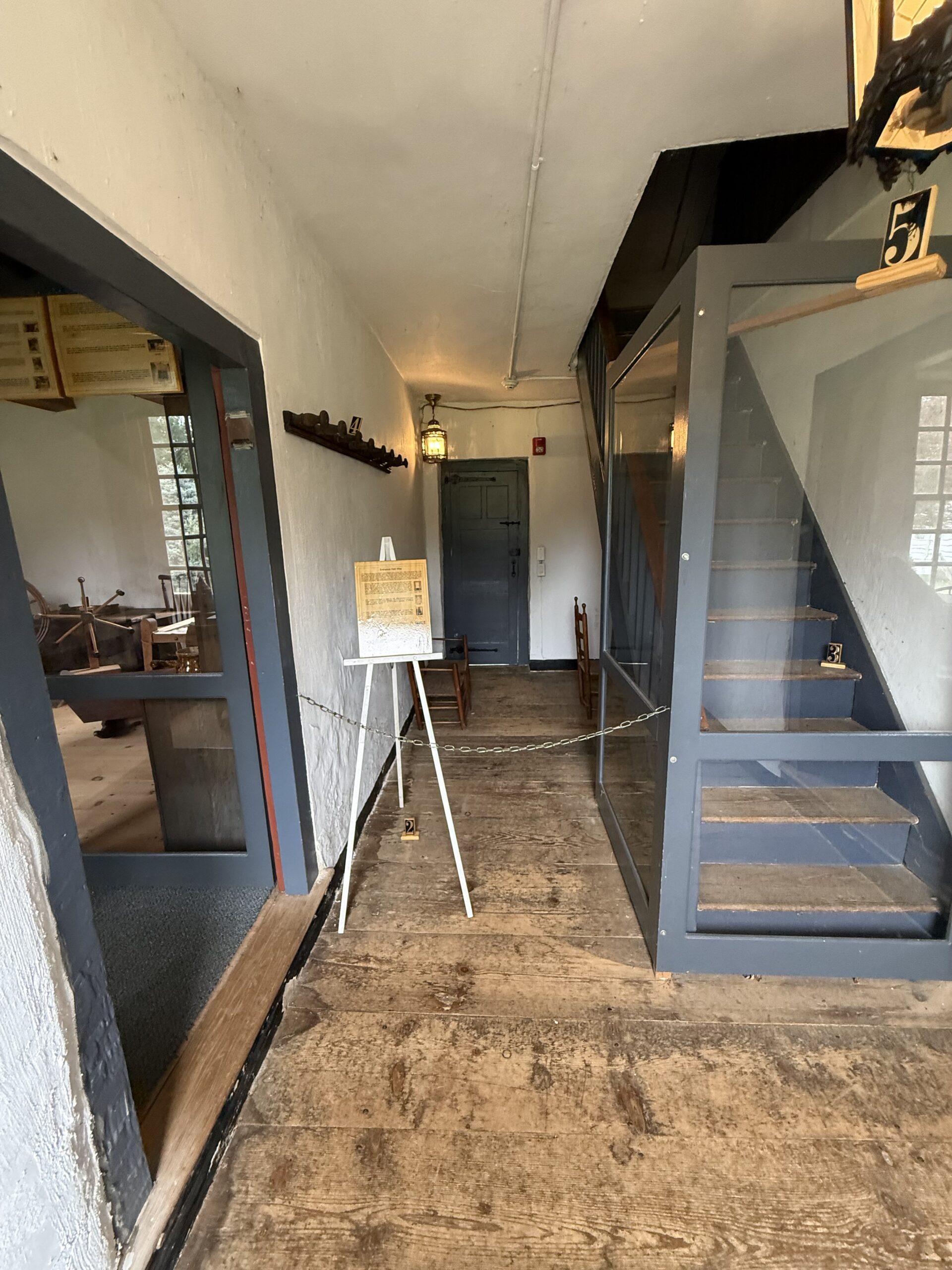
Like the wood floor, a staircase was installed in 1845. During the era when General Washington visited, a ladder was used to access the second floor. No one lived up there as the attic area could not be heated, instead it served as a storage space. Again, despite its inauthenticity to the times, the staircase was kept for building maintenance.
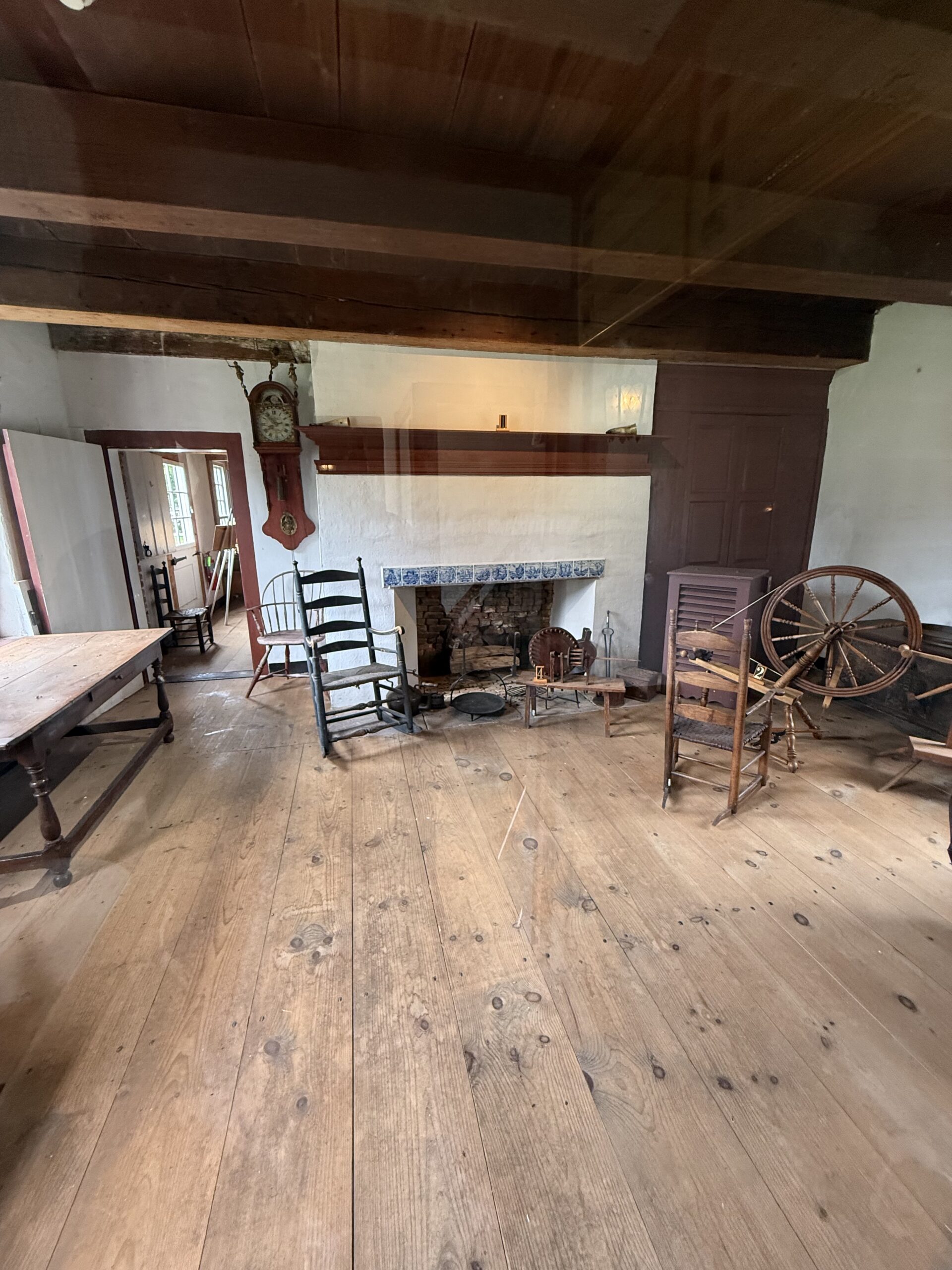
To the left of where I stood was the north room. Originally the kitchen, DeWint converted it to a living space when the new kitchen was added in 1750, a reproduction of which was built in 1995.
General Washington was a guest in the south parlor twice in 1780, as well as in 1783. When not hosting the future first president, the room, on my right, was the DeWints’ primarily living space.
Both the north and the south rooms contained a spinning wheel, beamed ceilings and a fireplace. The south room’s hearth showcased stunning tiles while the bed frame and desk made it easy to picture General Washington living and working in this room.
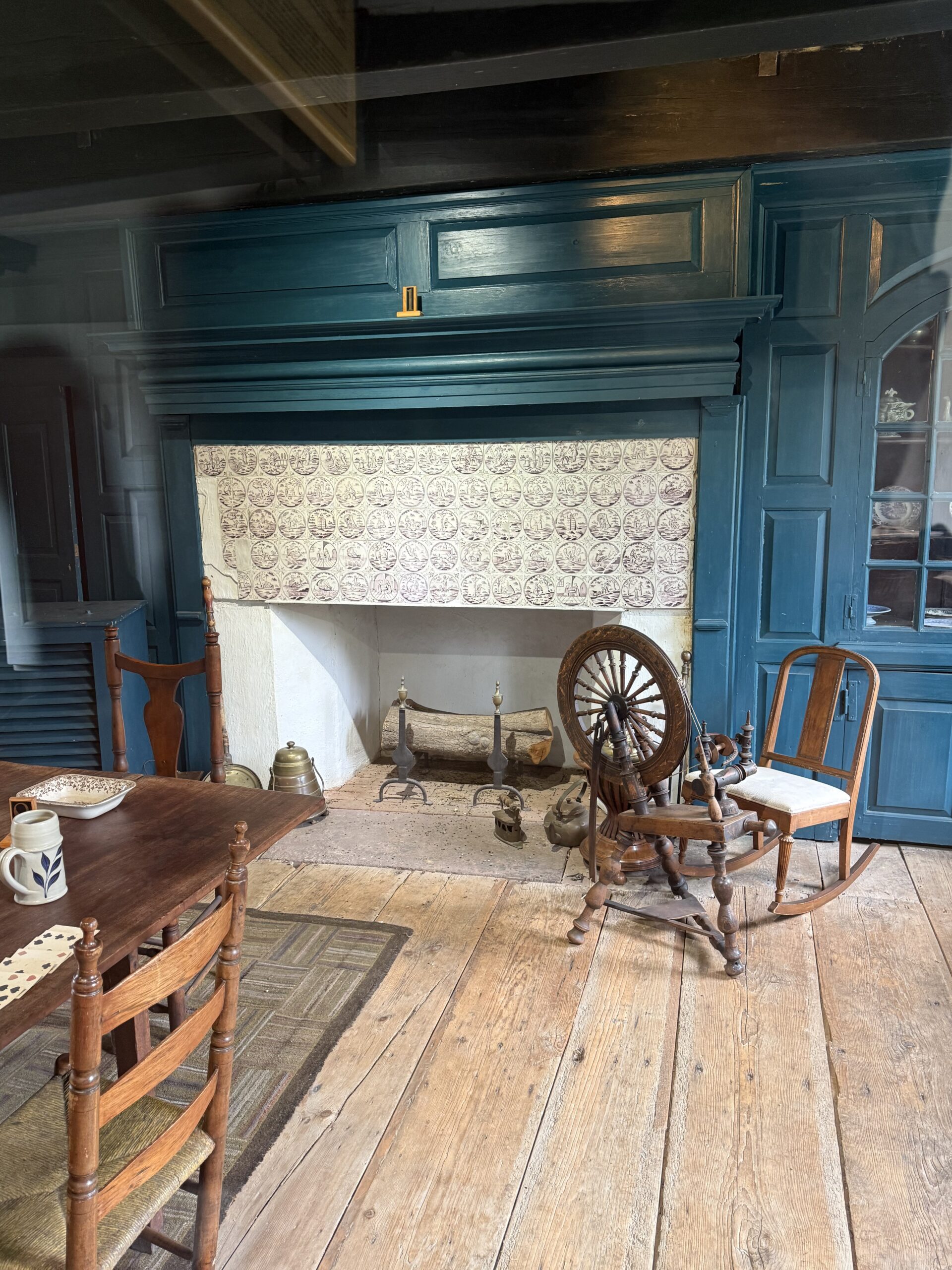
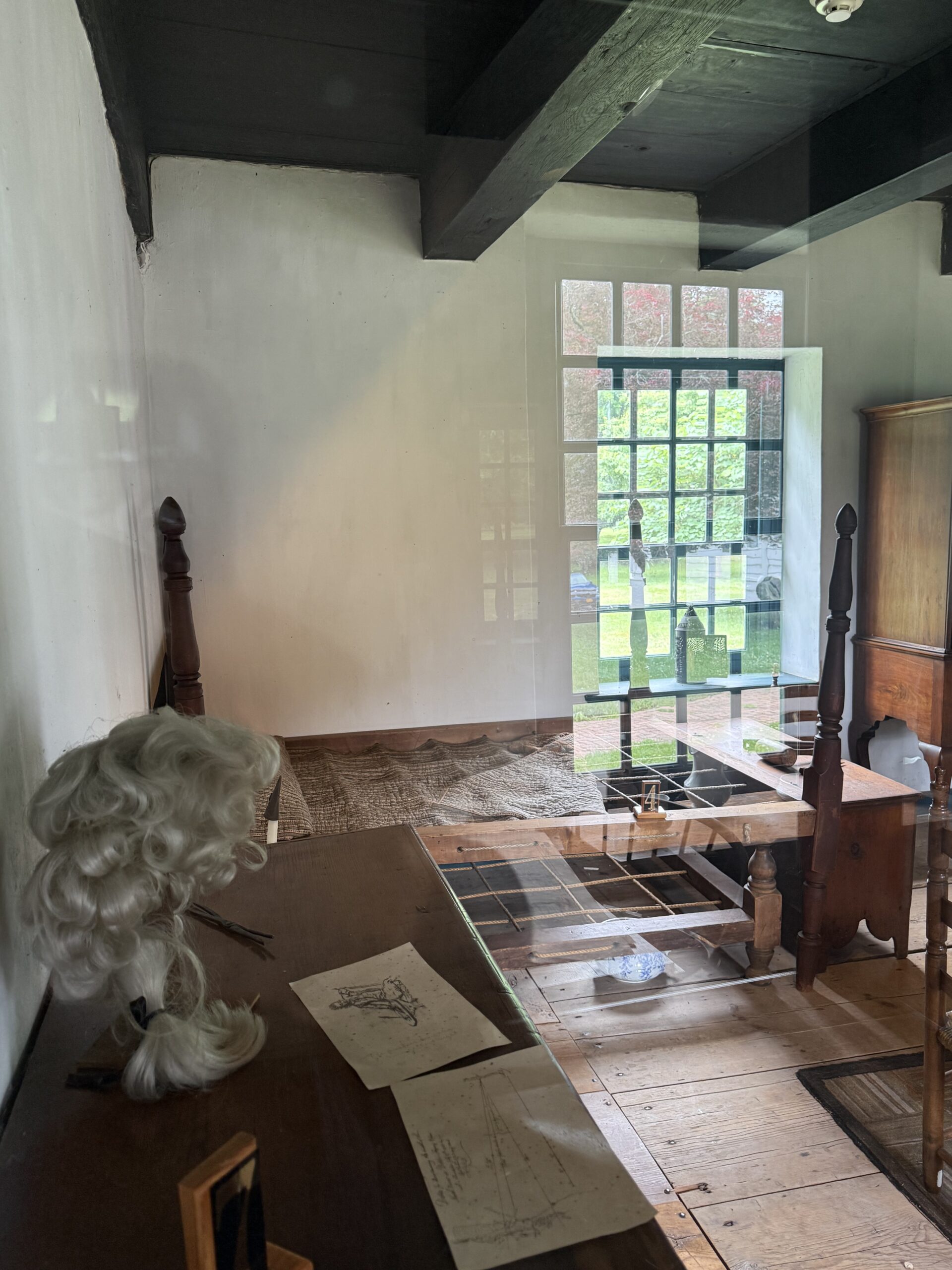
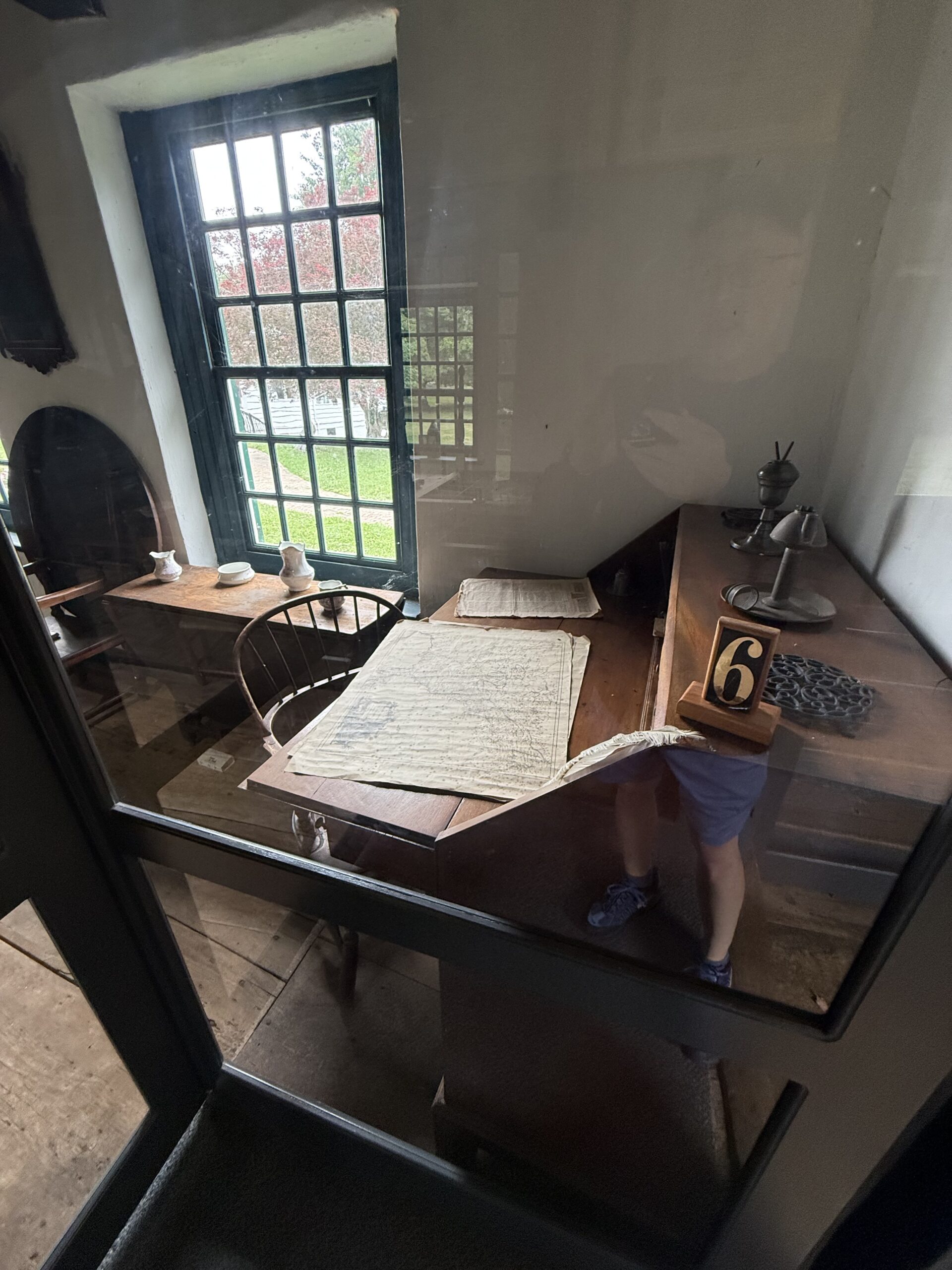
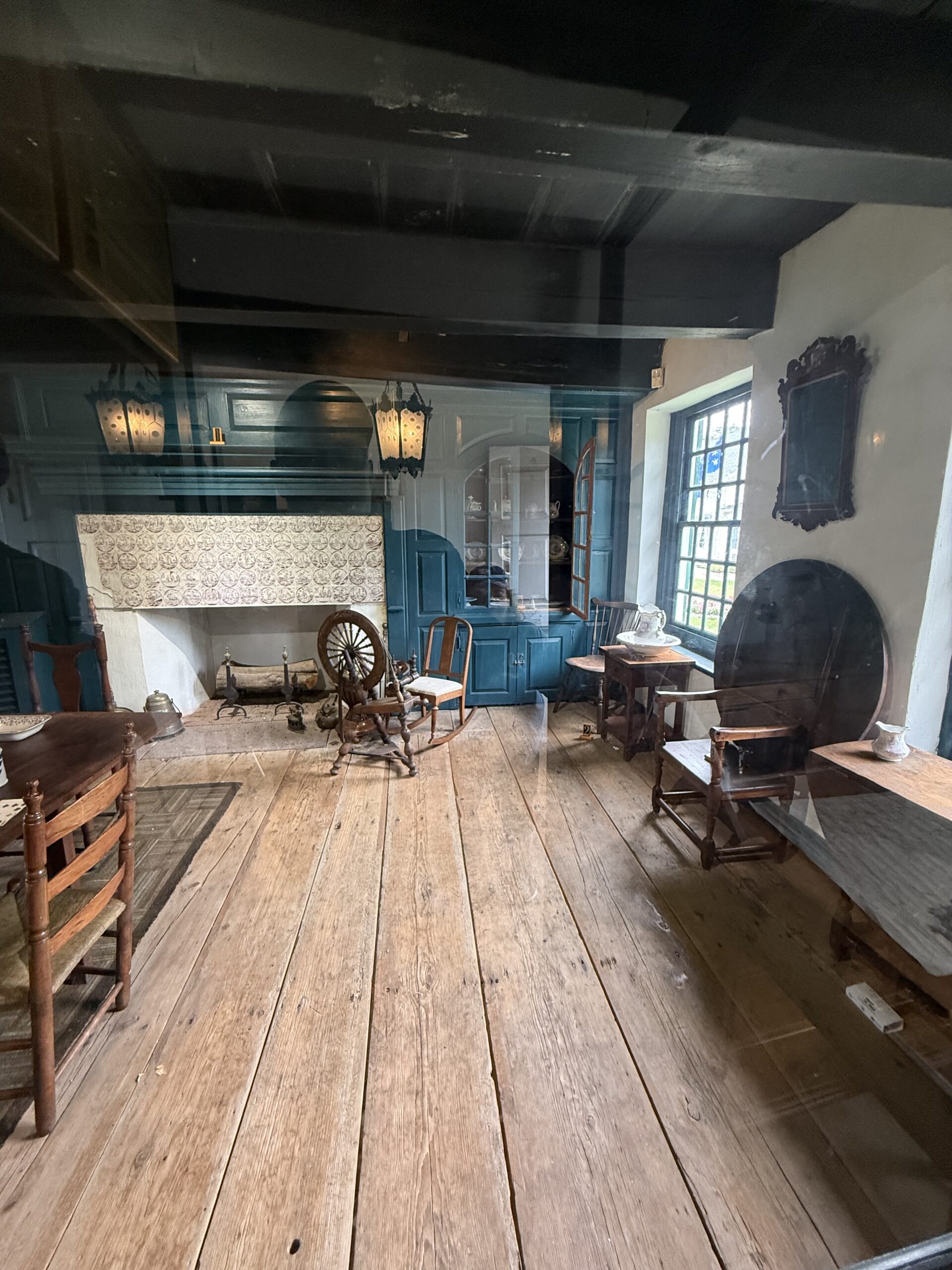
While in residence in the fall of 1780, General Washington carefully deliberated the execution of British Major John Andre before signing his death warrant. On the day that Andre met his fate at the gallows, General Washington had the home’s shutters closed to avoid seeing any of the events surrounding the hanging.
During his stay in 1783, General Washington entertained British General Sir Guy Carleton to negotiate the defeated British army’s evacuation of New York City.
While I was at the DeWint House and with the writing of this story, I saved the best for last: the coat rack in the hallway. It is the only home furnishing that was in the house at the same time as George Washington was. He would most certainly have hung (no pun intended, Major Andre) his hat and coat on this rack. I, of course, touched it.
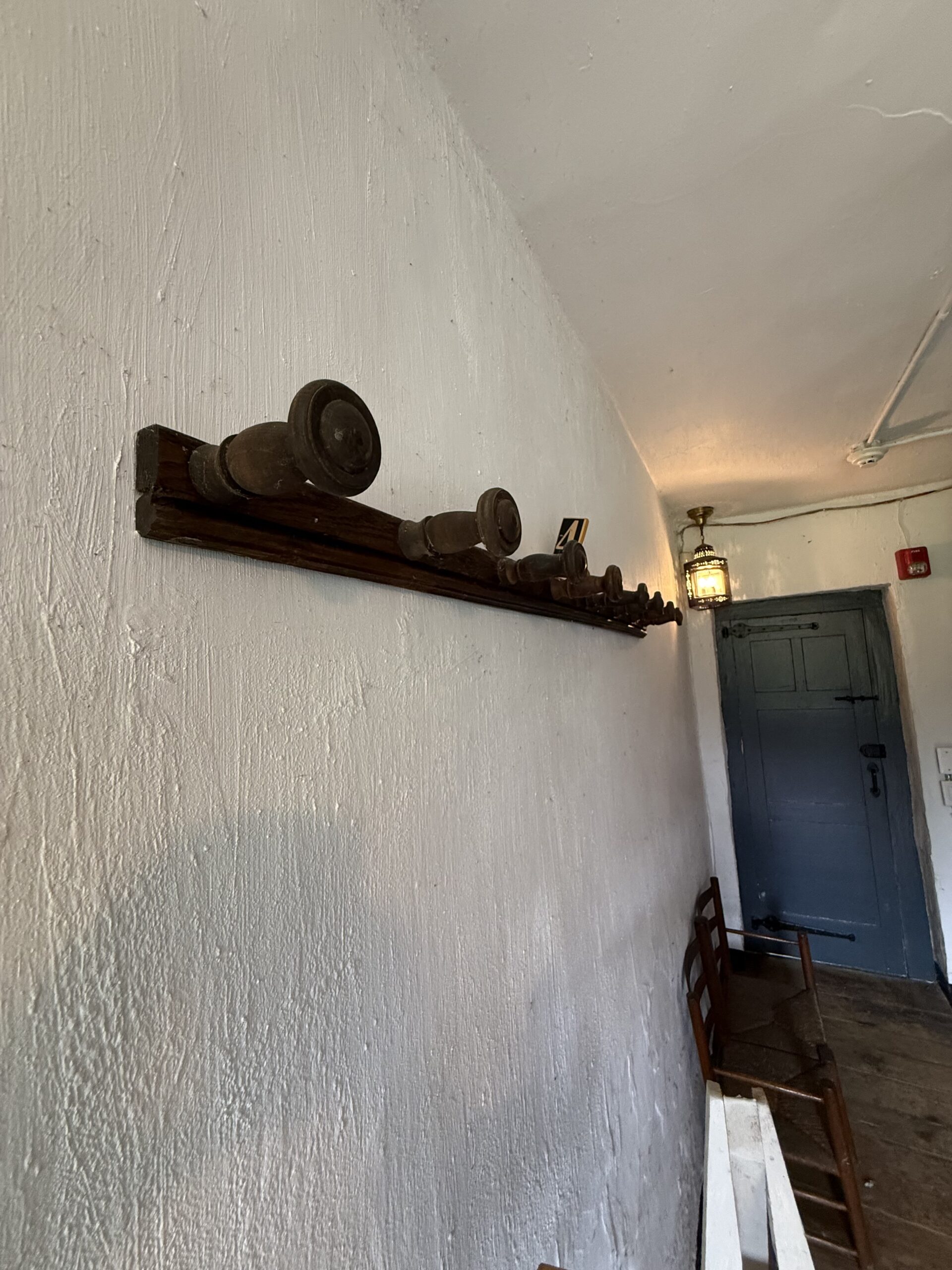
I have never had a National Historic Landmak all to myself. I am not going to tell a lie, I loved it. But even if I had shared it with others, the DeWint House would have still been a D-light. After all, George was here. And I touched the coat rack to prove it.
#SisterRain #ALittleSightALotOfHeart #LegallyBlindWriter #AmericanHistory #America #AmericanRevolution #America250 #CulperSpyRing #TURNWashingtonsSpies #TappanNewYork #GeorgeWashington #MajorJohnAndre #DeWintHouse
