





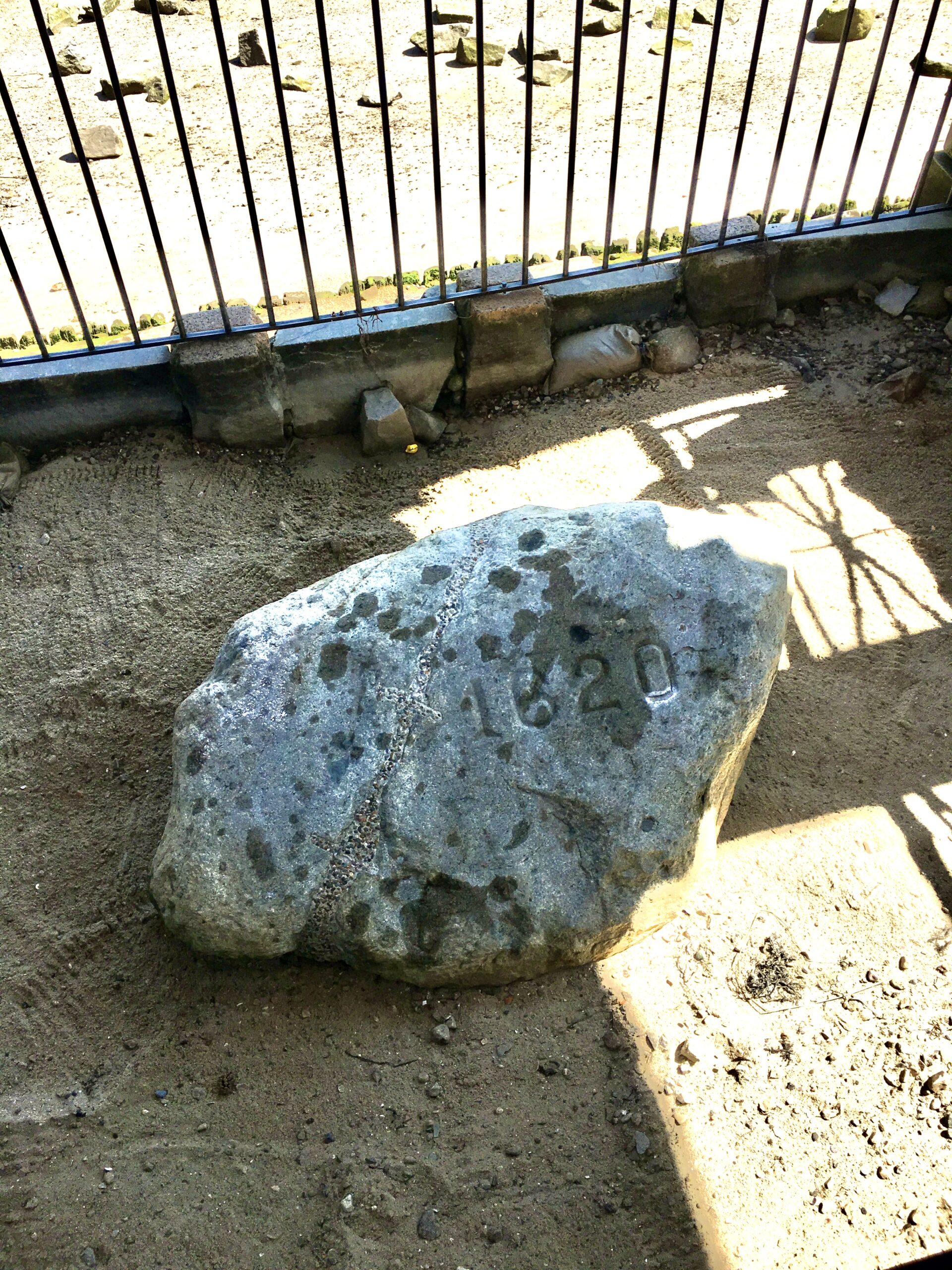
When my husband and I took our nephew, 12 years old at the time, to see Plymouth Rock in Plymouth, Massachusetts, he (our nephew) thought we were teasing him about what the boulder was. I got the impression he hadn’t learned about it in school, but I honestly didn’t want to know what isn’t being taught these days, so I didn’t dig any deeper.
We assured him that we were not pulling either of his legs, explaining that Plymouth Rock is the long-established landing site of the Mayflower Pilgrims in December 1620. In 1741, Thomas Faunce, a church elder, told townspeople that his father, who arrived just after the initial landing, as well as Mayflower passengers, identified this specific rock as the spot.
“How do they know that’s really the rock they landed on?,” our nephew asked.
I had first stood in this same place three decades earlier during my high school senior class trip. I remember secretly being thrilled to see Plymouth Rock while many of my classmates had the same question as our nephew, along with the cynicism that only teenagers about to graduate can display.
I had to be honest with him. “They don’t.” There is no record from that time period, including in William Bradford’s journal, that mentions the Pilgrims stepping on a rock. “At the very least,” I offered, “it is a symbol of what occurred here, as the site of the first permanent European settlement in New England, by the Pilgrims.”
Being used as the Mayflower & Co.’s welcome mat – allegedly – was just the start of Plymouth Rock’s . . . um . . . rocky relationship with humans. While attempting to move the rock in 1774, it broke in two. Some in Plymouth saw this as as an omen for the separation of the American colonies from Great Britain.
The upper half was moved, while the bottom remained at the wharf. Over 100 years later, in 1880, the two pieces were reunited on the shore and cemented back together, with “1620” carved into it.
The permanent granite portico was built over the rock in 1921.
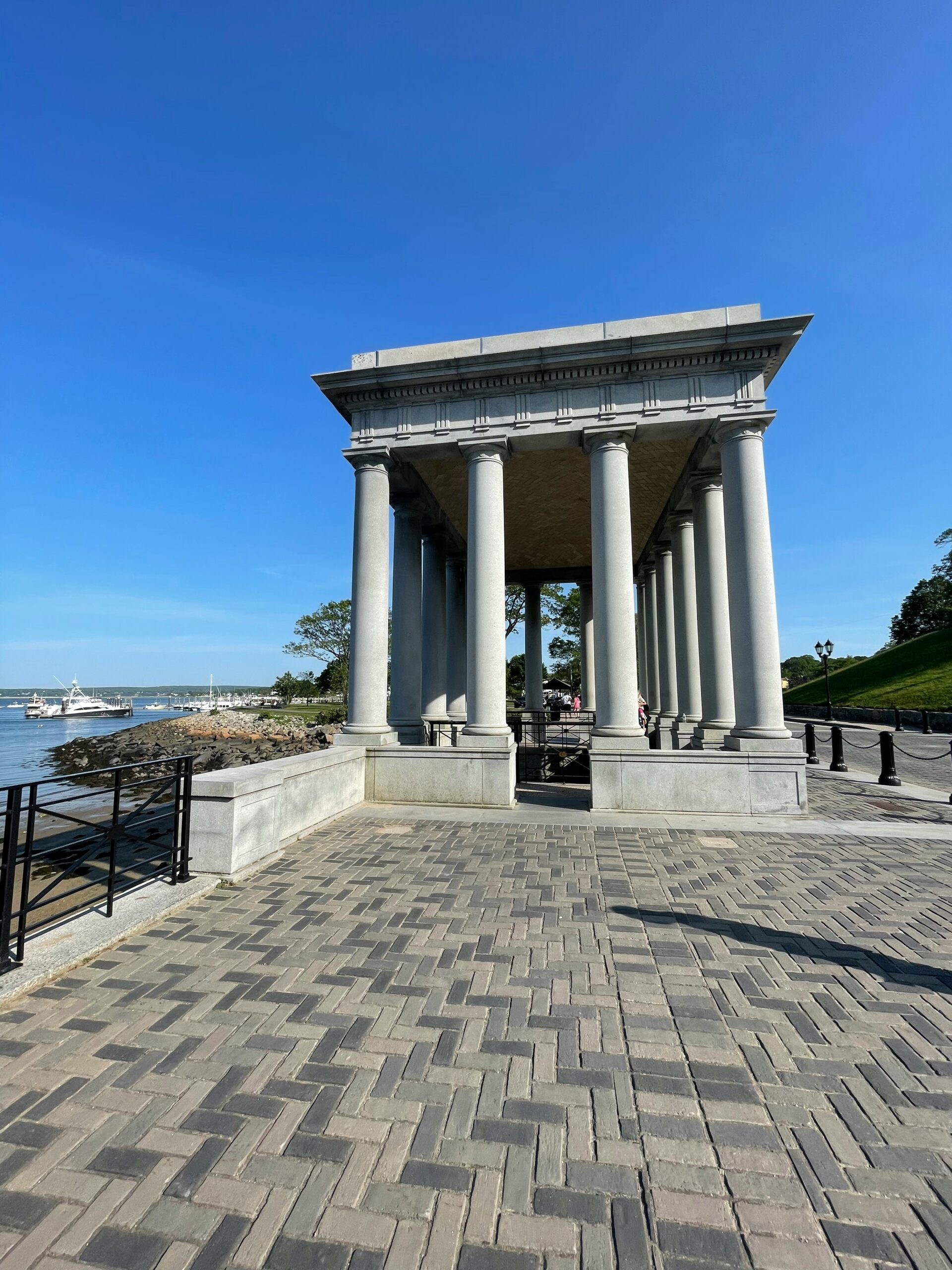
Monuments are often made of rock, in this case the rock is the monument. It is one heck of a conversation piece. It provokes discussion and the opportunity to teach. Though an inanimate boulder lying in the sand, Plymouth Rock is the epitome of living history.
#SisterRain #ALittleSightALotOfHeart #LegallyBlindWriter #USHistory #AmericanHistory #USA #UnitedStates #America #Massachusetts #Pilgrims #PlymouthRock #LivingHistory
